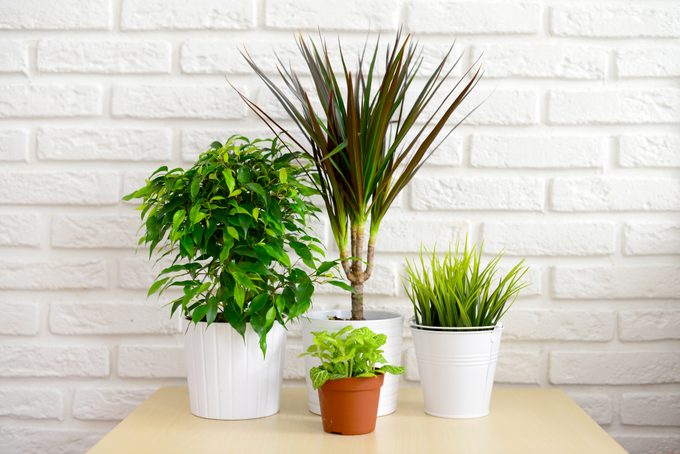
Trailing plants come in many shapes and sizes. Some, like string of hearts, hang straight down, while others have, like spider plant, have volume around the base. That means there’s something for every space and every planter.
These gorgeous trailing plants have enough character to stand alone, and some are perfect for adding dimension to a mixed container. Whether you’re planting a hanging basket, placing a pot on a high shelf or adding a wall planter to your backyard fence, these trailing plants are sure to add plenty of texture and color to your space.
Property taxes are taxes on real estate levied by state and sometimes local governments. They’re a major source of revenue for these government entities, and go to pay for services that most state residents need, such as schools, public transportation, emergency services, parks and recreation, and public health services.
Property taxes are determined by the assessed value of your property, including land value. So even in a state with low tax rates, the owner of a $600,000 home will pay more in property taxes than the owner of a $250,000 home. In states and municipalities where there are state, local, and sometimes even hyper-local property taxes — say, for example, a school district tax — the tax rates are combined as a single rate. WalletHub’s most recent analysis of property tax rates is based on figures from the 2019 census, and calculates the per-state tax rate on a home valued at $217,500. Rates range from 0.28 percent of home value, or $606 in Hawaii, to 2.49 percent, or $5,419, for a $217,500 home in New Jersey, the state with the highest property tax rates.
Below, we take a look at the states with the highest and lowest property tax rates and evaluate median home prices and some quality of life indicators.
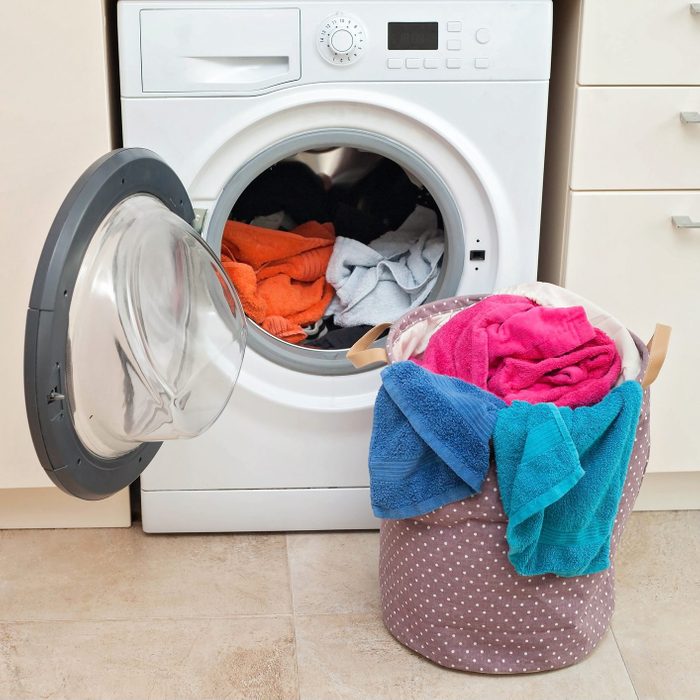
I’ve worked as an appliance technician for more than 30 years and have been asked this question hundreds of times. The short answer is, there’s something wrong with the dryer’s airflow.
Here’s the way it’s supposed to work: The heated air mixes with the wet laundry, then that moist air is carried outside via the dryer vent tube. There are a number of things along the way that can derail this process and leave your clothes damp.
Fortunately, there are seven DIY fixes you can try when your dryer’s airflow isn’t optimal. If none solves the problem, you’re probably got a blown hi-limit, failed element, broken igniter or bad coils. You’ll need to hire a pro to fix those.
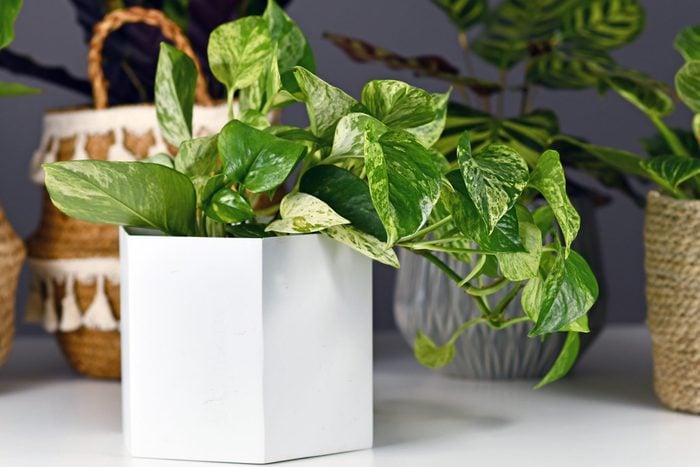
Often hailed as the easiest plant to propagate, pothos is great for first-timers. This beautiful trailing vine can be propagated through stem cutting, one of the most common forms.
“To make a stem cutting, choose a section of stem containing at least two leaves,” says Stephanie Turner, a horticulture agent with Clemson Cooperative Extension. “Make a clean cut right above a leaf with a sharp pair of scissors or clippers. Insert the stem of the cutting in water or moist growing medium promptly.”
Whether you have a new nursery plant or an old one in an overgrown container, repotting is a big part of being a plant parent. Learning when and how to repot ensures new plants start in the right environment and old plants continue to grow.
Here’s what you need to know about when to repot houseplants, how to choose a new container and how to move the plant from one to the other.
When To Repot a Houseplant
You won’t have to repot houseplants often — once a year at the most. The frequency depends on the plant’s species, age and growth rate.
“For instance, fast-growing species (Begonia, Epipremnum, Tradescantia) should be repotted every year,” says Julia Omelchenko, a resident botanist expert for the NatureID app. “And slow-growing ones (Aloe, some species of cacti, Ficus) need to be moved to a new pot once every two to three years.”
Younger plants grow more rapidly and will need more frequent repotting. Mature plants, on the other hand, may be perfectly happy in the same pot for four years.
Spring is ideal for repotting a houseplant. Plants often go dormant in the winter and begin growing again as daylight hours increase in the spring. Repotting gives them the room they need to grow. But that doesn’t mean you have to wait for spring. If a plant is showing signs of stress or poor health, go ahead and repot any time of year.
Try to repot in the evening if possible. “At night, in the absence of bright sunlight, the plant’s metabolism slows down, so it has a chance to recover from repotting stress,” Omelchenko says.
How to tell when it’s time to repot a plant
You don’t have to follow a strict repotting schedule. Plants will tell you when they’ve outgrown their container. Chris Satch, Horti’s plant doctor (@botanictonic), says to keep an eye out for these symptoms:
Plant may stop growing;
Roots may poke out from the bottom;
New leaves will grow, but an equal number may drop;
Plant above ground height is higher than twice the pot’s height.
Other symptoms include small or stunted growth, yellow leaves, roots growing above the surface and poor water retention. Many of these symptoms can also be attributed to pests, disease or dormancy, though. Check the roots if you suspect it might be time to repot.
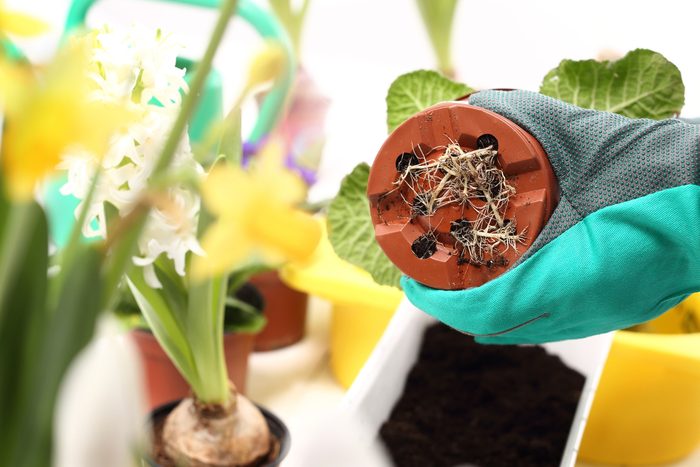
You might see roots coming out of the drainage hole. That’s a sure sign the plant needs repotting. “But it’s best to repot the plant before that happens,” Omelchenko says. “Otherwise, it’ll be impossible to extract the plant without damaging its roots.”
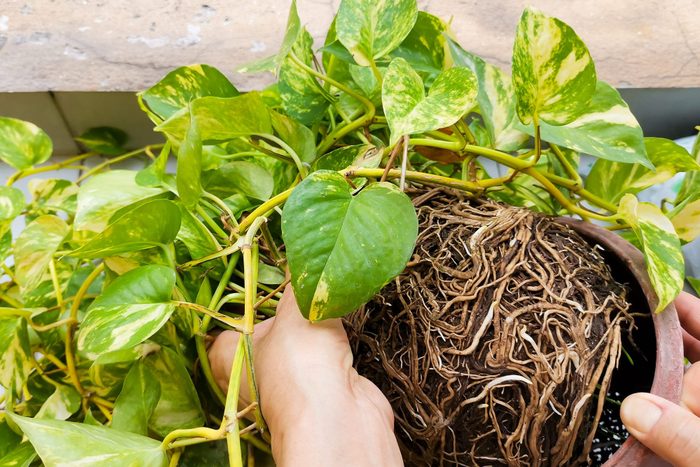
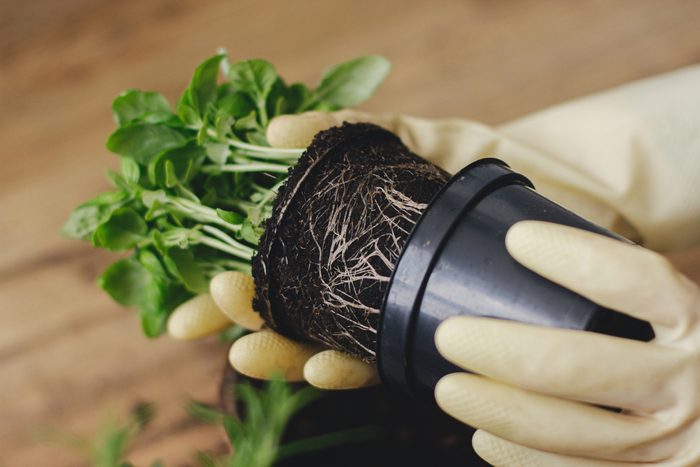
If roots aren’t coming out of the drainage hole, you can still check them. “Carefully remove the plant together with the substrate from the pot,” Omelchenko says. “If you can see the roots but not the soil, then the plant needs to move to a bigger pot.”
This is also a good time to check the health of the roots. They should be light-colored and plump, not dark and crumbly. Rotting roots are a sign of overwatering, but pests or disease can also affect root health.
How To Choose a New Pot
Once you’ve identified the need to repot a plant, it’s time to choose the right pot. Finding the right size, material and design, then filling it with the right soil, are major factors in your plant’s health and growth.
Plant pot size
Jumping up in pot size is not recommended; better to take small steps. Too much extra space means too much empty soil, which means too much water retention, leading to root rot. You want the pot to have just enough free space for the plant to grow, but not so much that the pot is half full of soggy soil.
“Ideally, the new pot should be one to 1.5-inches (three to four centimeters) larger than the previous one,” says Omelchenko. However, for a large or especially fast-growing plant, you could increase by up to four inches. A three- to four-inch increase in diameter is fine for plants in 12-inch diameter pots or larger, according to Satch.
Plant pot features
Drainage is the most important feature to look for in a new pot. Some people put horticultural charcoal or lava rocks at the bottom of pots, but it’s not nearly as effective as a drainage hole.
If you fall in love with a pot without drainage holes, you can still use it, but don’t plant directly into it. Instead, use it as a cache pot and plant into a plastic nursery pot, then set the plant into the cache pot.
Using a cache pot has a few bonuses. First, it’s easier to switch out pots as your home décor style evolves. Second, it’s easier to remove plants and repot them from softer plastic containers. Third, plastic pots with plenty of drainage holes are good for plants that prefer bottom watering.
In addition to drainage, the material of the pot matters. “If you water frequently, or the plant likes to be dry, opt for terra-cotta,” says Satch. “Otherwise, glazed ceramic or plastic/fiberglass is fine.”
Metal pots aren’t recommended for cold climates. “Metal cools down fast, so even the slightest draft coupled with excessive watering can lead to the overcooling of the root system,” Omelchenko says.
Most indoor pots are shaped about the same, though some may be tall and narrow or shallow and wide. Research how your plant grows before choosing a pot. Succulents with their shallow roots and can thrive in shallower containers, like this wood log planter. Plants with deep roots, like an indoor lemon tree, prefer a deep container. And trailing plants like wide containers. You might even want to hang your plant.
How To Repot a Houseplant
Repotting a plant is quick and easy. The most difficult part is often getting the plant out of its old pot. It’s a delicate process and takes a gentle hand to avoid damaging the plant.
Prepare the new container
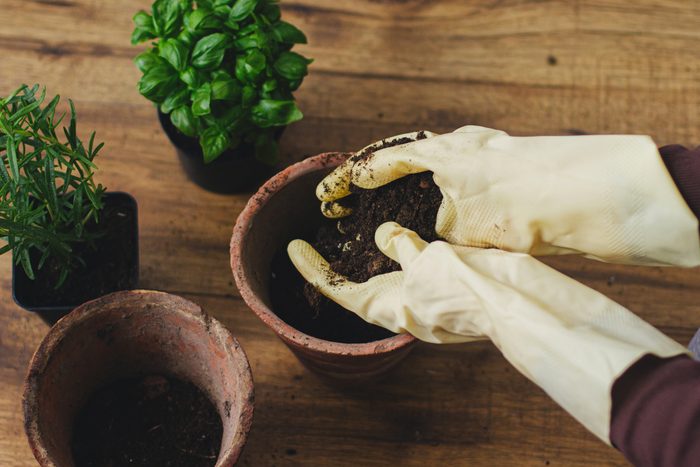
Start by preparing the new container. Research the type of potting soil that is best for your specific plant, and add some to the bottom of the container. A potting mat is helpful for containing the mess when mixing soil and repotting plants.
Remove the plant from the old container
Removing a plant from a plastic nursery container is easiest. Simply place a hand over the soil around the base of the plant and flip the container sideways into that hand. The plant will often slide right out. If it doesn’t come out with a gentle wiggle of the base, try squeezing the sides of the container. If it’s still stuck, use a chopstick to loosen the soil, or cut off the plastic container.
Removing a plant from a ceramic pot is more difficult since you can’t squeeze the sides of the pot. Pushing a chopstick around the edge of the container helps to loosen the soil and unstick the plant.
Repot the plant
After removing the plant from its old container, massage the bottom of the roots. They’ll be tightly bound from the old, small pot and need to be loosened a little before replanting. This is also the time to brush off excess soil to make room for fresh, nutrient-packed soil.
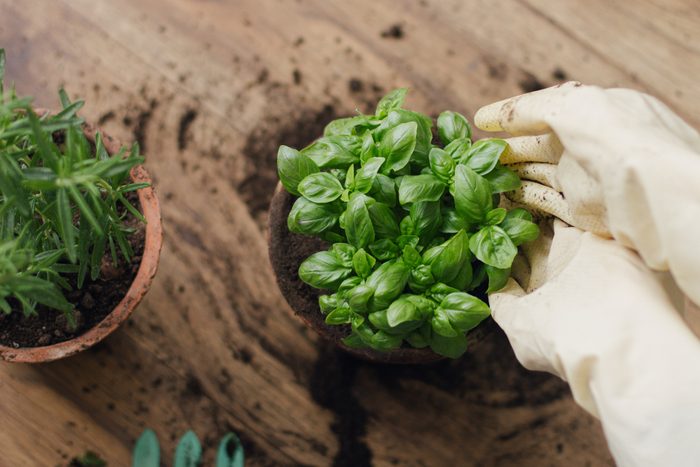
Place the plant into the new pot. If it seems too deep, take it out and add more soil to the bottom. Then fill in the space around the edges with fresh soil. Be sure to keep the plant centered as you add the new soil. Don’t pack the soil down too much. You want it loose enough for air and water to flow down and reach the roots.
Repotting a plant can cause it to go into shock, so don’t fertilize right away or move it to a new spot. Instead, water lightly and leave it alone to get settled into its new home.
There’s one unavoidable fact in gardening and landscaping: No matter how modest your task, at some point you’ll need to move large amounts of heavy stuff. Maybe you’re that rare person with the time and patience to move a pile of rocks from the driveway to the backyard stone by stone. Props. But what do you do with a one-ton load of topsoil?
The point is, if you’re going to tackle any kind of landscaping or gardening project, you’ll need a wheelbarrow to move heavy loads more efficiently. And for that, we highly recommend the Gorilla Carts Poly Garden Dump Cart.
Gorilla Carts Poly Garden Dump Cart is FHM Approved
Rather than wobble over the contours and around the obstacles of your yard with a single-wheel wheelbarrow, the poly garden dump cart from Gorilla Carts lets you navigate those tricky spaces with ease. With four wheels for balance and a simple steering system, it’s easy to use over hill or dale. It also holds a lot of weight and features a quick-release dump system.
What Is the Gorilla Carts Poly Garden Dump Cart?
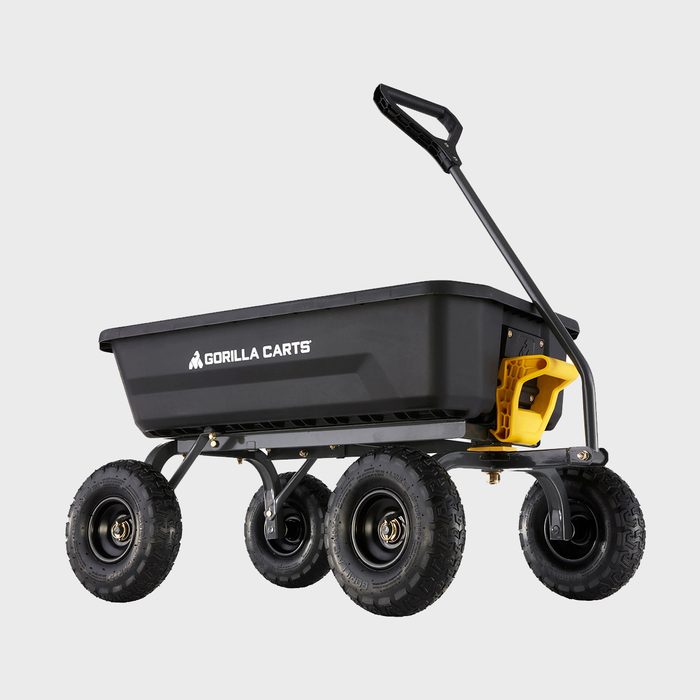
Based out of Minnesota, Gorilla Carts makes a range of garden carts. This one is from their line of quick-release dump carts. It’s available in 4- and 7-cu. ft. models. We used the 4-cu. ft. version for this review.
The business end features a 35-in. x 22-in. x 8-in. durable poly bed that holds up to 600 pounds. (The 7-cu.-ft. version can handle twice that.) It sits on a steel frame that rides high on four, 10-in. pneumatic tires, offering plenty of clearance.
The long handle and front wheels connect in a zero-turn steering system. A quick-release handle lets you dump the entire cart in one simple motion. Assembled, it weighs about 37 pounds.
How We Tested It
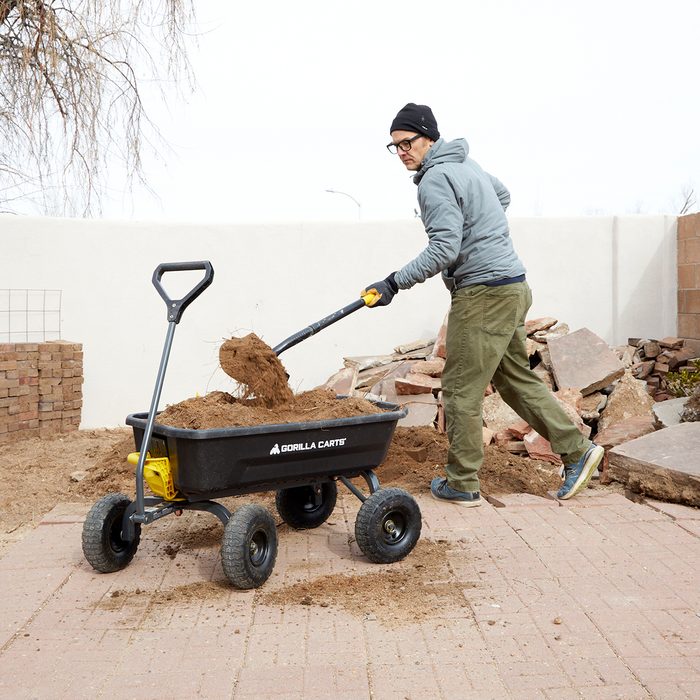
We put it to work for the Family Handyman backyard build project. We started off using it to haul dirt we dug out of a 6-in. deep trench, then to carry and dump pea gravel into that trench. We also moved large, heavy round stones we used for building gabions.
Performance Review
The first step is putting it together. All you need are a couple of wrenches. I used a socket wrench on the stainless steel hardware, and it only took about 20 minutes to have it ready to roll. It comes with easy-to-follow instructions, and the hardware needed is attached to the instruction sheet with the corresponding step — a nice touch.
A side bonus for me: Gorilla doesn’t overdo it with packing materials, so you don’t need to haul away a mound of Styrofoam and plastic.
When you put a lot of weight into a standard wheelbarrow, it can be hard to lift off the ground, even if you’re not skipping leg day at the gym. Wheelbarrows can also be difficult to steer with a quarter ton of cargo in it, especially over bumpy terrain. And dumping hefty cargo an inexact science, adding more shoveling or raking to your to-do list.
None of that is an issue with the Gorilla Cart.
The four rubber tires can navigate all kinds of terrain. I pulled it over scattered flagstones and divots, and even through a 6-in. deep trench, without a single worry that the dirt or rocks would fall out. The zero-turn steering helps a lot, too. You can bob and weave through obstacles, and easily position it to dump your load in the perfect spot.
The longer pull handle means taller people can use it without straining their back, but it’s not so long that it’s awkward for someone of average height, like me (I’m 5-9).
Loading it was a snap, too. The cart sits lower than a standard wheelbarrow, so you don’t have to throw stuff as high to fill it up. That’s also nice when you’re piling a lot into it. The poly sides flexed outward a bit with the heavy gabion rocks, but there was never a doubt about its structural integrity with the big, round stones in there.
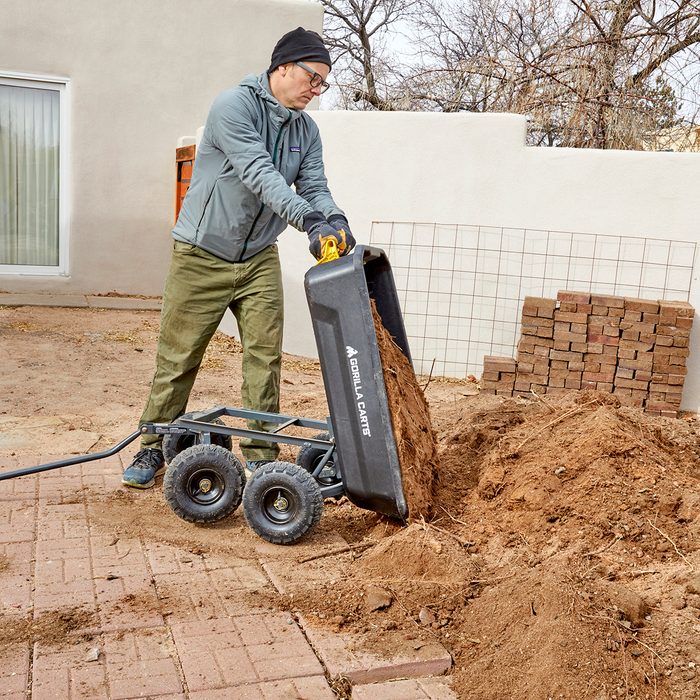
What I liked most about the Gorilla Cart is how it dumps. There’s a spring-loaded handle that latches to the steel frame. When you’re ready to empty the cart, just reach down, pull the sturdy handle to unlatch it, and lift it up.
The handle and a pivot point in the back half of the cart let you dump even the heaviest load with one hand. And with the zero turn steering, you can line it up to put the contents exactly where you want it to go, avoiding shoveling and raking.
Anyone can use these carts. For hauling mulch to heavy duty landscaping work, this cart can get it done. I really love it. And at a little more then $100, it’s a great value. (The 7-cu. ft. model costs more, but it’s still less than $200.)
The main downside? Because it’s a four-wheeled cart, it can’t handle a path narrower than 20 inches. However, because it can roll over so many obstacles, you can use it just about anywhere. For storage, the cart style means you just tilt it up against the wall in the shed, like a wheelbarrow.
Why You Should Buy This
The Gorilla Cart makes it easy to move, dump and manipulate heavy loads. For most users, the 4-cu. ft. model will be more than enough. But if you’ve a landscaping pro or manage a lot of land, the 7-cu. ft. model might be a better fit for your needs.
Where to Buy This
The latest model of the Gorilla Dump cart is available at Lowe’s and The Home Depot.
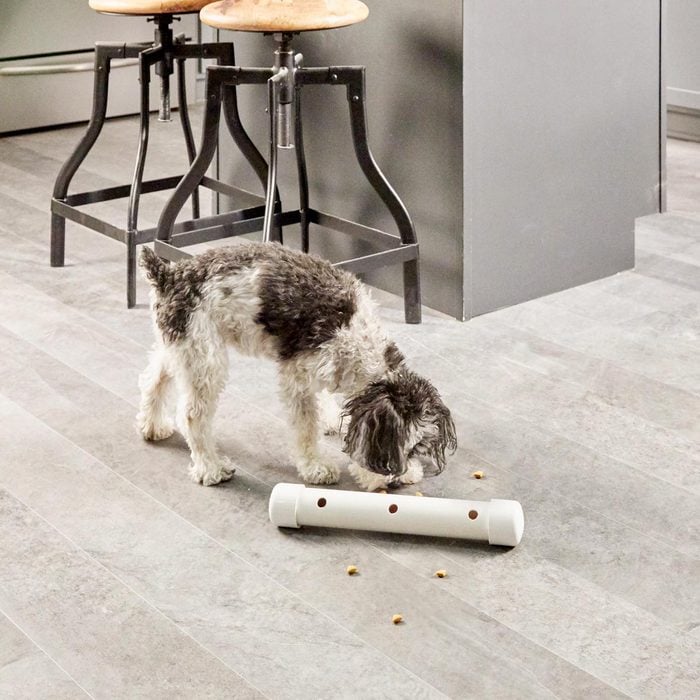
My puppy was eating his food too fast and vomiting it right back up. Instead of buying a slow-feed bowl, I drilled holes in a 12-inch length of 2-in. PVC pipe and capped the ends. Then I filled the tube with puppy food.
My puppy has to roll it around to get the food to fall out of the holes. That slows him down and avoids the mess. Be sure the holes are large enough for the food to come out! – Charlie May.