Meal Prep Delivery

Friday, October 1, 2021

8 Pet Safe Floor Cleaners and DIY Solutions

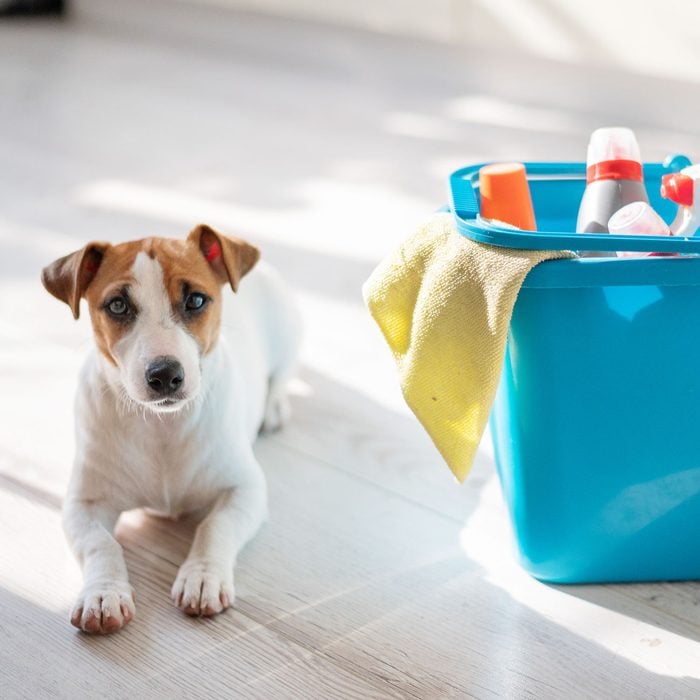
a dog on the floor with floor cleaning supplies

What Are Pet-Safe Floor Cleaners?

Prancy paws, fuzzy bellies and even drooly tongues are constantly frolicking, slinking and scurrying through our homes. Later, when they start licking and grooming, dogs and cats can be in real danger if they’ve stepped in something toxic. Pet-safe floor cleaners can help ensure the residues they pick up during their day won’t hurt them.

“Often these products are also more environmentally friendly because they contain natural ingredients or avoid the use of harsh chemicals that can be caustic or irritative or even toxic in certain amounts,” says Rebecca Greenstein, a veterinary medical advisor for Rover.

Common ingredients to avoid include:

  • Isopropyl alcohol (rubbing alcohol);
  • Bleach (chlorine);
  • Ammonia;
  • Hydrogen peroxide;
  • Formaldehyde (AKA formalin, methanol, methylene oxide);
  • Perchloroethylene;
  • Phenols;
  • Phosphates;
  • Glycol ethers;
  • Phthalates (artificial fragrances);
  • Glycol ether benzoic acid;
  • Ethanol;
  • Quaternary ammonium compounds;
  • Sulfates;
  • Triclosan.

Using Pet Safe Floor Cleaners

When using pet-safe floor cleaners, you still need to be careful. “When it comes to pets, nothing is ever ‘totally safe!’ ” Greenstein says. “We can’t always trust that our curious pets won’t try to ingest large amounts by accident, which can lead to anything from simple irritation to GI upset to more serious issues depending on the amount in question.”

Also, keep in mind some commercial cleaning products containing toxic ingredients are not considered dangerous as long as they are used as directed. “Even at our vet clinic, we often need to use strong disinfectants or even bleach, but diluted,” she says.

Regardless of what cleaner you’re using, take these steps:

  • Keep pets out of the room you’re cleaning until the floors are dry,
  • Don’t leave disinfectants unattended. Store them in a secure location,
  • Consider rinsing floors with water after cleaning,
  • If you suspect ingestion, call ASPCA’s Animal Poison Control Center at (888) 426-4435 and get your pet to a vet immediately.

Still, there are lots of floor cleaners sold with pets in mind that contain none of the ingredients on the list above. Read on for our top picks, including two DIY pet floor cleaner recipes.


Article source here: 8 Pet Safe Floor Cleaners and DIY Solutions

New Safety Standards for Working in the Heat Coming From OSHA

The U.S. Department of Labor recently announced it’s reexamining safety standards for working in the heat and expanding its efforts to protect workers from heat-related illnesses. As part of this initiative, the Occupational Safety and Health Administration (OSHA) will work to ensure workplace heat standards are being enforced while developing new standards based on current climate science.

“Throughout the nation, millions of workers face serious hazards from high temperatures both outdoors and indoors,” U.S. Department of Labor Secretary Marty Walsh said in a statement. “Amid changing climate, the growing frequency and intensity of extreme heat events is increasing the dangers workers face, especially for workers of color who disproportionately work in essential jobs in tough conditions.

“As Secretary of Labor, my priority is to make sure we are taking appropriate action to keep workers healthy and safe on the job.”

In October 2021, OSHA plans to issue an “advance notice of proposed rule-making on heat injury and illness prevention.” Once that happens, OSHA will start gathering information and technical expertise on heat safety topics that could eventually help shape a new federal standard for heat safety.

According to data from the Bureau of Labor Statistics, 43 workers in the U.S. died from heat illness in 2019, with at least 2,410 more suffering from serious heat-related injuries or illnesses. To keep this number from rising, OSHA will implement an “enforcement initiative” of heat standards across many industries, even those not typically associated with heat safety.

Said Jim Frederick, OSHA’s acting assistant secretary: “While agricultural and construction workers often come to mind first when thinking about workers most exposed to heat hazards, without proper safety actions, sun protection and climate-control, intense heat can be harmful to a wide variety of workers indoors or outdoors and during any season.’

This enforcement initiative will require OSHA area directors to focus on heat safety standards in the following ways, according to the statement:

  • Prioritize inspections of heat-related complaints, referrals and employer-reported illnesses, and initiate an onsite investigation where possible.
  • Instruct compliance safety and health officers to conduct an intervention on jobsites, discussing the importance of easy access to cool water, cooling areas and acclimatization. They may also open an inspection if they observe employees performing strenuous work in hot conditions.
  • Expand the scope of other inspections to address heat-related hazards where worksite conditions or other evidence indicates these hazards may be present.


Article source here: New Safety Standards for Working in the Heat Coming From OSHA

One Piece vs. Two Piece Toilet: What’s The Difference?

If you’ve never shopped for a toilet before, you might be surprised to learn there are different types. Here we’ll discuss the differences between the two most common types of toilets — one piece and two piece — and help you decide which to choose.

What are the Differences?

It’s simple: A two piece toilet has a separate tank and bowl, while a one piece is all connected. But there are other differences, too. One piece toilets are typically heavier and easier to clean, and there’s less space for bacteria to grow. Because two piece toilets feature a detachable tank, they’re more customizable for preferred styles and heights.

Both styles can include bells and whistles like bidet attachments or low-flow energy saving. Also, either can be shaped in the standard styles: elongated, which is slightly longer, and round.

Because one piece toilets are heavier, they can be more expensive to ship if you order one online.

Pros and Cons

One piece toilets

Pros:

  • More durable;
  • Easier to clean;
  • Higher end look.

Cons:

  • More expensive;
  • Heavier.

Two piece toilets

Pros: 

  • Less expensive;
  • More options for look/height.

Cons: 

  • Less durable (more likely to break);
  • More complex installation;
  • Greater chance of a leak;
  • Lower end look.

Cost Difference and Options

Most one piece toilets sold online at The Home Depot range between $250 and $600. The top-selling one piece toilet, the Santa Rosa comfort height compact toilet by Kohler, costs $360.

Conversely, most two piece toilets at The Home Depot run between $100 and $400. The Home Depot’s top selling two piece toilet, the champion tall height high-efficiency toilet by American Standard, costs about $250.

Depending on your preference, you can easily exceed the price range for both toilet types. The most expensive one piece toilet The Home Depot sells is this honed black Numi dual flush elongated toilet, which costs $9,750. That’s right, nearly ten grand for a toilet. The most expensive two piece toilet at The Home Depot runs $3,591.

You might also consider replacing your the lid of your new toilet with a bidet attachment. These are considered a more hygienic option than toilet paper.


Article source here: One Piece vs. Two Piece Toilet: What’s The Difference?

Laminate vs. Vinyl Flooring: How to Choose

Commanding almost 29 percent of the flooring market share in 2020 according to Statista, resilient vinyl flooring has risen in popularity to leave laminate far behind, with a 12.5 percent share.

Things weren’t always this way. Laminate used to be the more popular flooring material, and millions of homeowners still choose it over vinyl. Laminate and vinyl plank flooring actually are cousins: They were introduced to the North American market at around the same time as low-cost alternatives to hardwood, tile and other traditional flooring materials.

Vinyl and laminate resemble each other and cost about the same. But there are key differences you need to know if you’re trying to decide between them.

What Is Laminate Flooring?

The Swedish company Perstorp was the first to incorporate plastic laminate into flooring, introducing Pergo to the European market in 1984 and to North America in the mid 1990s. Its North American popularity was no doubt due to its Euro-design lineage. But today, many other companies manufacture and sell laminate flooring.

Laminate flooring boards feature four layers: a vinyl backing; a core made from medium density fiberboard (MDF) or high-density fiberboard (HDF); a design layer that bears a photographic pattern of wood or some other natural material; and a durable, transparent wear layer.

The core in laminate flooring boards is milled with a tongue and groove that allows installers to snap the boards together and leave the flooring suspended over the sub floor without being physically attached. This creates a floating floor.

What Is Vinyl Flooring?

For many years, vinyl composite tiles (VCT) and sheet vinyl were the only forms of vinyl flooring available. Both still are. However, in the 1970s, manufacturers revolutionized the vinyl flooring market by introducing luxury vinyl tiles (LVT) and luxury vinyl planks (LVP), which had more in common with laminate flooring than sheet vinyl or VCTs.

Like laminate boards, LVT and LVP are constructed in layers. From the top down: a performance wear layer covering a design layer, followed by a core, and finally a backing. Early cores were made of vinyl, but contemporary ones may be made from wood polymer composite (WPC) or stone polymer composite (SPC). Both offer rigidity and enhanced moisture resistance.

Vinyl flooring can be glued to the sub floor. But the most popular varieties feature interlocking tongues and grooves and install like laminate planks to make a floating floor.

Laminate vs. Vinyl Flooring: How Are They Alike?

During installation and after, it can be difficult to tell the difference between laminate and vinyl tile or plank floors because:

  • Installation methods are similar.
  • Both laminate and vinyl planks feature realistic depictions of wood, stone and other natural materials, and these depictions are becoming increasingly convincing.
  • Laminate and vinyl flooring costs about the same, ranging from $1 per square foot for basic products and $6 per square foot for high-quality ones. The average cost is $3 per square foot.
  • Both are low-maintenance, stain-resistant flooring options, requiring only occasional cleaning and vacuuming.
  • Laminate and vinyl planks conduct heat equally well and are recommended for radiant floors.
  • Both have similar lifespans, easily lasting from 10 to 25 years.
  • Top-quality laminate and vinyl plank flooring can increase a home’s resale value, although the same can’t be said for inferior products.

Laminate vs. Vinyl Flooring: How Are They Different?

Laminate and vinyl planks feature plastic design and wear layers. But vinyl planks also have plastic cores, while laminate cores are made from wood composites. This is one of the most important differences between the products.

  • Vinyl planks and tiles are waterproof, especially the more recent WPC and SPC products. Laminate cores are vulnerable to moisture. The planks can shrink or swell, sometimes forming gaps in particularly low humidity.
  • Laminate is only available as click-lock planks. Vinyl flooring comes in more formats, including VCT and sheet flooring. Vinyl flooring is also available in a wider range of designs.
  • Laminate flooring has a flat, smooth surface that more closely resembles hardwood than vinyl, which often has a textured surface that makes it look artificial.

When Is Laminate the Better Choice?

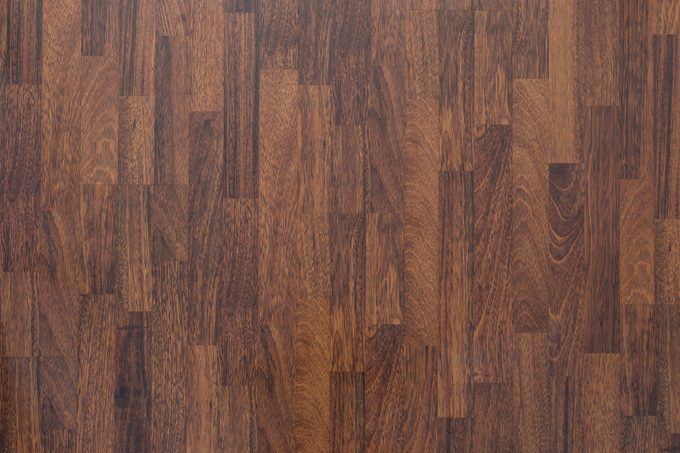
Brown wood laminate flooring texture background in house.

Although it’s basically plastic, the surface of a laminate floor looks like wood, making it a great low-cost alternative for homeowners who want the look of hardwood without breaking the bank.

  • Laminate works best in living rooms, bedrooms and other parts of the house that are relatively dry.
  • Laminate flooring has a slight advantage over vinyl for eco-conscious homeowners. Top brands are often manufactured with recycled materials, and laminate’s wood-based core will decompose in landfills.
  • When it’s installed with a suitable underlayment, laminate is more comfortable and quieter than vinyl. That’s why it’s great in bedrooms and living areas.

When Is Vinyl the Better Choice?

Vinyl makes up in durability for what it lacks in authentic appearance.

  • Because of its superior moisture resistance, vinyl plank flooring can be installed where laminates can’t, including basements, bathrooms, laundry rooms and mudrooms.
  • The surface of vinyl flooring has more give, making it easier for pets to navigate. That, together with its superior resistance to stains from accidents, makes it a better choice for homes with pets.
  • Unlike laminate, which has to be cut with a saw, vinyl can be cut with a knife. For DIYers, it’s the easier product to install.
  • Because it’s available in a wider range of designs, vinyl flooring is often the better choice for homeowners trying to match existing décor or make a design statement.


Article source here: Laminate vs. Vinyl Flooring: How to Choose

The Best Bathroom Mirrors of 2021

Seamless Medicine Cabinet Mirror

Best Medicine Cabinet Mirror

This seamless mirrored medicine cabinet from West Elm can be wall-mounted or recessed into the wall so you’d never know that extra storage space is there.

The mirrored door can open from the left or right to reveal four adjustable glass shelves. Useful and beautiful, it’s available in five finishes — brass, chrome, dark bronze, and polished and brushed nickel. One is sure to work well in your bathroom.

Shop Now


Article source here: The Best Bathroom Mirrors of 2021

The Best Bathroom Heaters of 2021

Best Bathroom Heaters

Buying a Bathroom Heater

Getting out of bed is hard enough when it’s cold out, and the idea of venturing into a frigid bathroom makes it even harder. The best bathroom heaters remedy that by warming up the space quickly and easily. They’re available in various types and sizes; one is probably right for you.

Consider these factors when choosing a bathroom heater:

Safety

  • For plug-in heaters, make sure it has an Appliance Leakage Current Interrupter (ALCI) plug. This ensures it will shut off if it falls into a sink of water, and greatly reduces any chance of electrical shock. Most portable space heaters do NOT have an ALCI plug, which is why you shouldn’t use just any heater in your bathroom.
  • If you have pets or small children, consider a wall- or ceiling-mounted unit so it’s out of reach. Some heaters become hot to the touch, and potentially dangerous for curious fingers and paws.
  • Always plug your corded bathroom heater into a Ground Fault Circuit Interrupter (GFCI) outlet. Identified by their “test” and “reset” buttons, these shut off the circuit if electrical flow turns irregular. GFCIs have been mandatory in bathrooms since 1975, but if you live in an older home, double-check your outlets.

Installation

  • Will you be installing your heater yourself? Carefully review the installation requirements and instructions for your heater. If it requires more electrical work than you’re comfortable with, leave it to an electrician.
  • If you go with a pro, factor that cost into the total price of your heater.

Heat output

  • Depending on the size of your bathroom, you might require a more powerful heater than you think. Generally, ceiling- and wall-mounted units pump more heat than smaller portable units.
  • Determine the square footage of your bathroom so you know the heater you choose is properly sized. Here’s how:
  1. Add the length of each wall.
  2. Multiply that number by the height of the room from floor to ceiling. This number is the square footage of the room.


Article source here: The Best Bathroom Heaters of 2021

How to Choose the Best Washing Machine Temperature for Your Clothes

There are many factors to consider when determining how to do laundry the right way: What’s the best laundry detergent? Should you use fabric softener? And what do your garments’ laundry symbols indicate about the best washing method? What temperature to wash clothes is another decision you need to make, and it’s one that often confuses people.

In the past, using hot water was the best way to get clothes clean because detergents weren’t as effective as they are today, explains Jessica Zinna, PhD, a senior scientist with Tide. As technology has advanced, so have the requirements for washing clothes. “Laundry detergents have improved, washing machines have advanced cleaning capabilities, and new fabric types have become popular,” she says. “These changes allow for the use of cold water to achieve a deep clean on your clothes.”

So if both hot and cold water clean items well, how do you know what temperature to wash clothes? Read on for everything you need to know about setting your washing machine temp.

When to use hot water

The first thing you should always do when figuring out what temperature to wash clothes is refer to the specific care label on your garment to see if it can be safely washed in hot water, says Zinna.

Many people use hot water for their laundry because they believe it gets clothes cleaner. “As anyone knows from trying to clean dirty dishes in cold water, it’s easier to clean in hot water than it is in cold water because cleaning ingredients are more active given the higher thermal energy of hot water,” she says.

But while hot water cleans efficiently, it can also shrink your clothes, cause fading, and lead to dye transfer, which can make your garments look older faster. It also requires more energy. “Up to 90 percent of the energy used during the laundry process goes toward heating the wash water for warm or hot cycles,” Zinna explains.

There are situations in which using warm or hot water is important, “like when a member of the household is ill, or for heavily soiled garments like cloth diapers, sheets, and workout clothing,” she says. Hot water is also best if anyone in the household is suspected or confirmed of having COVID-19, and laundry guidelines from the Centers for Disease Control and Prevention specify the appropriate water settings to use. In that case, wash your sheets, pillowcases, clothing—you name it—in hot water.

Pros of hot water:

  • Good for cleaning heavily soiled clothes
  • Smartest option when a member of the household is sick
  • Necessary when a member of the household has COVID-19

Cons of hot water:

  • May shrink clothes
  • Can lead to fading and/or dye transfer
  • Uses more energy

When to use warm water

Many people opt to use warm water for most of their laundry. Happy medium, right? Well, not exactly. It often isn’t the best option. “Warm water, though less damaging than hot water, can still cause shrinkage, fading, and dye transfer, which can prematurely age your garments,” Zinna explains.

To lower your risk of those laundry blunders, refer to the specific care label on your garment (prior to washing) to see if it can be safely laundered in warm water.

Though Zinna suggests washing most of your loads using cold water, she admits warm water is useful when someone is ill or items are heavily soiled. For instance, that’s how to wash towels that are stained with grease from your work in the garage.

Pros of warm water:

  • Good for cleaning heavily soiled items
  • Good option when a member of the household is sick

Cons of warm water:

  • May shrink clothes
  • Can lead to fading and/or dye transfer

When to use cold water

A lot of people grew up thinking cold laundry was made of darks, while hot laundry was full of whites. In reality, you should use cold water for most of your loads “because it provides an effective clean, is more sustainable, and improves the longevity of your clothes by preventing wear and tear,” explains Zinna.

If you’re ever doubting what temperature to wash clothes or are laundering clothes without care labels, cold water is your best bet for preventing damage, including shrinkage and fading. Yes, that’s even how to wash whites to keep them bright.

Washing your clothes in cold water is also the most energy-efficient option. If you’re interested in washing in cold water to help preserve clothes, save energy, and save money on your energy bill (up to $150 a year!), Zinna suggests using a specially formulated detergent, like Tide Hygienic Clean Heavy Duty 10X Power Pods. “They are a great option because they are formulated with enzymes and surfactants specially designed to provide superior cleaning in cold water,” she says. Another great pick: Persil ProClean Liquid Laundry Detergent.

Keep in mind that you can always wash garments whose care label specifies warm water in cold water instead. “The rule of thumb is that you can always go down in recommended temperature but should not go up in temperature,” Zinna notes.

She also debunks the myth that your clothes will shrink at 40 degrees, adding that washing in cold water will instead prevent shrinkage. “You should always check the care labels on garments, though, because some delicate garments, like sweaters or dry-clean-only items, should not be washed in water, regardless of the temperature,” she says. By washing in cold water, you can save yourself the step of learning to unshrink clothes.

Pros of cold water:

  • Most energy-efficient option
  • Won’t shrink or fade clothing.
  • Prolongs clothing’s life
  • Saves you money on energy

Cons of cold water:

  • Less effective for heavily soiled items
  • Doesn’t sanitize clothes

What are the differences in water temperature?

The exact range of your water temperature can vary by manufacturer. “Refer to your user manual or appliance manufacturer for exact ranges if desired,” Zinna says.

That said, she offered the following temperature ranges for the three washing machine settings:

Washing Machine Temperature Chart

How do I know if the temperature settings on my washing machine are correct?

The following tips work for both traditional and HE washers. To check the temperature of your top-load washing machine water, Zinna suggests the following steps:

  1. Turn your washing machine on to the desired temperature setting, such as hot or cold.

  2. Hold a candy thermometer under the water stream as it comes out of your machine. Check the washing machine temperature to see if the water is within the range for your desired setting.

  3. If the water temperature is not in range, contact a licensed service technician or the appliance manufacturer to troubleshoot.

For front-loading machines, there is not a straightforward way to test your water temperature at home, Zinna notes. “Contact a licensed service technician or the appliance manufacturer to troubleshoot if you are concerned about your water temperatures,” she says.

Refer to the chart below to determine the best water temperature to use for your laundry load:

Washing Machine Temperature Chart 2

Source:


Article source here: How to Choose the Best Washing Machine Temperature for Your Clothes

Could More Green Lights Be the Key To Slowing Drivers Down?

Few things on the road are as infuriating as waiting at a red light . Especially when it happens after waiting at the previous traffic light...