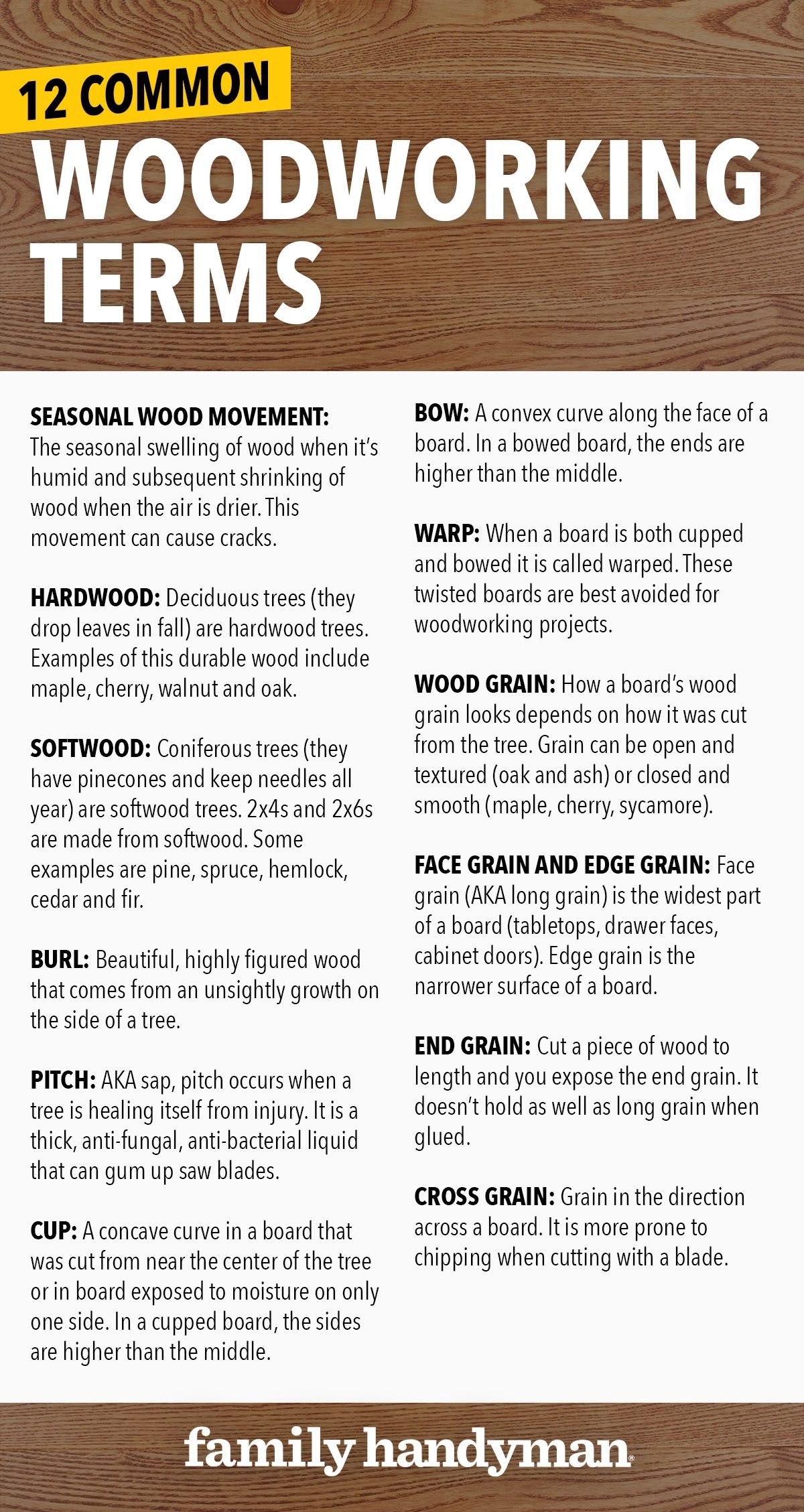
For woodworkers, “Seasonal Wood Movement” is a term that is top-of-mind when making any project, so it’s the perfect place to start. Simply put, all solid wood swells when it’s humid and shrinks when the air is drier. This seasonal swelling and shrinking can crack open corner joints and change the structure of wooden furniture. It can also result in cracks or cupping* across the face of a solid wood board.
Each species of wood is different, but red oak, for example, can swell and shrink 3/16-in. over a 12-in. width. That means that a 36-in.-wide solid-wood tabletop could swell or shrink up to a 1/2-in. over the course of a year!
Wood moves as a percentage of the size of the wood, therefore smaller parts move less than large parts. Plywood, which is far more stable than solid wood, was developed to avoid the problems created by seasonal wood movement.
If you’ve ever peeked inside an oven and noticed a fan whirring in the back, you’re looking at a convection oven. That fan is its secret to success. The fan circulates heat throughout the oven, evenly cooking whatever’s inside— very similar to the technology that is used in an air fryer.
We love convection ovens because they cook a tender pot roast to perfection and bake cookies baked with a golden brown finish. Plus, convection cooking is known for reduced cooking time and improved energy efficiency.
Convection Ovens vs. Conventional Ovens
A conventional oven uses a single heating element, usually located on the top or the bottom of the oven. It can result in hot and cold spots within the oven. As Whirlpool’s Institute of Home Science explains, “In a traditional oven, the rack closest to the heat source would have the highest temperature, with the rack furthest away having the lowest.” You can see why it’s all about the fan when it comes to convection ovens! The fan blowing hot air around each rack ensures a consistent temperature throughout the whole oven, cooking food more evenly.
When to Use the Convection Setting
The circulation of warm air in convection baking results in evenly browned surfaces—think poultry skin, pork roast and double-crust fruit pies. It’s great for roasted vegetables, roasted meats, and of course, cookies. Air circulation also means that two pans of cookies baking at the same time on the upper and lower oven racks will bake evenly without having to rotate the pans. Just don’t overcrowd the ovens, as the air needs room to circulate.
When Not to Use the Convection Setting
You’ll want to skip the convection setting with certain recipes, though. Let your chewy cookies, cheesecakes and custards traditional bake. These dishes will have unwelcome browning and dryness if baked in a convection oven.
Tips for Successful Convection Cooking
So now that you know the benefits of cooking with a convection oven—are there any other tricks to the method? Of course! We have a few tips for convection success:
Bakes one or two test cookies before tackling the whole batch. You want to be able to adjust the baking time and temperature for the best results.
Reduce your oven temperature by 25° F. Your oven may automatically reduce the temp by 25° F when a convection bake is selected. To find out if your oven does this, consult the manual. You don’t want to find out the hard way that you reduced the temp unnecessarily and now your cookies are underbaked and overspread!
Check your food 10 to 15 minutes earlier than the recipe suggests.
The most important element is air circulation. So allow a couple of inches above and below each item you’re cooking.
Use dishes with low sides (like cookie sheets) for optimal airflow.
If you’re a homeowner looking to wrap up a kitchen renovation or a home builder trying to finish off a new custom home build, you are probably already well aware of the current shortage of home appliances. Ever since the start of the COVID-19 pandemic, home appliances have been difficult to find in stock and purchase. And even if you do manage to get your hands on a new appliance, there’s a solid chance that it comes with some pretty significant tech downgrades thanks to ongoing manufacturing constraints. Here’s a look at the three main reasons why there is a global shortage of home appliances.
Heightened Levels of Demand
Like many home products, demand for appliances rocketed up as people prepared to spend more time at home than ever before. That demand did not taper off as the pandemic stretched on. In fact, appliance sales in the first half of 2021 were even higher than they were in 2020. Unfortunately, that heightened demand hit at a time when manufacturing around the world was taking a significant hit. Pandemic-caused factory shutdowns made it nearly impossible for manufacturers to keep up with demand, creating a backlog that the appliance industry has yet to fully recover from.
Surging Tin Prices
One of the more recent developments hampering the global supply of appliances is the upward trend in tin prices. Tin, which is frequently used as a soldering agent in many types of manufacturing, has nearly doubled in price over the last year. Tin is now much more expensive and harder to come by in general and that is hampering appliance manufacturers’ output even more than it already has been.
“As the global economy normalises after the pandemic, do some of those tin-specific pandemic drivers start to fade? I think that’s a key question and uncertainty for demand next year,” Tom Mulqueen, head of research at Amalgamated Metal Trading (AMT) Ltd told Reuters.
Semiconductor Shortage
As with many of the shortages that are currently affecting the global economy, one of the root causes of the appliance shortage is the simultaneous shortage of semiconductor computer chips. A decade ago, a shortage of semiconductor chips would have had very little impact on the appliance industry. But since then appliances stuffed full of “smart technology” have become the norm, forcing appliance manufacturers to rely on computer chips to make things like smart refrigerators. But the market for these semiconductor chips is highly competitive, and there are only so many chips to go around. If the shortage of semi-conductor chips continues for much longer, appliance manufacturers may have to follow the example of automobile manufacturers and go back to making appliances without some of the high-tech features that consumers are now used to.
Good dog owners know the importance of taking their pets out for exercise, but dealing with tangled leashes can be a real drag. A great solution is a retractable dog leash. Retractable dog leashes won’t get tangled, don’t take up a ton of space near your front door, and are less likely to trip up your pup or get wrapped around their legs. They can give your dogs much desired freedom while still allowing you to quickly guide them closer to your side when necessary. Here are some of the best retractable dog leashes pet owners can buy today.
Note: According to PetMD, there is some debate about the safety of retractable dog leashes. Make sure to ask your veterinarian first if a retractable leash is a good choice for your pet.
One of the most dramatic ways to remodel your living room is to knock down a wall, creating that open concept plan you’ve always dreamed of. However, knocking out a wall is also one of the most expensive and labor-intensive ways to remodel a room. There are a lot of factors to consider, the most important being whether or not the wall you want to remove is load-bearing. Removing a load-bearing wall will require adding a support beam, and, depending on the complexity, might require hiring an engineer. If you have any doubt about whether a wall is structural, hire a professional for an evaluation.
Plants need exactly 22 things to exist: water, light and 20 essential elements that support their biochemical needs. As a gardener, you’re likely familiar with at least three of those elements — nitrogen, phosphorus and potassium.
What you may not know is that sulfur is another of those elements, and it’s just as crucial to plant health as phosphorus. Found in water, air, rock, animals, plants and our bodies, sulfur is absolutely essential for all living things.
Sources of Sulfur
Sulfur is abundant in the atmosphere, in the form of sulfur dioxide from man-made and natural processes. It’s also found in organic matter (compost, manure and decomposing plant matter), organic fertilizers (cow and pig manure) and mineral fertilizer.
Most of what we use in the garden starts as elemental sulfur. This occurs naturally in soil and deposits from hot springs, usually appearing as yellow crystals. But plant roots can only absorb sulfur in sulfate form, so it needs to be converted.
That’s where sulfur flour and flowers of sulfur come in. Both are created from elemental sulfur and are turned into sulfuric acid by soil bacteria, creating the sulfates needed by plants.
Though its toxicity is low, sulfur dust may irritate sensitive skin and eyes. Chronic, excessive sulfur dust exposure by miners over a lifetime could result in eye or lung disturbances. When handling sulfur, best to wear protective gear such as a respirator or mask, safety glasses and gloves.
What Are the Benefits of Sulfur in Gardening?
Over-fertilization, excessive rainfall leaching or long-term crop removal can deplete sulfur from soil. Adding some can help when the pH levels of the soil are too high (alkaline) or too low (acidic). Here are the ways sulfur benefits soil:
Increased soil biodiversity. Biodiversity is important for the overall health of soil, because it helps create a balanced and healthy ecosystem. Different types of bacteria, fungi, and other microorganisms can help to break down organic matter and make nutrients available to plants.
Improved soil structure. Sulfur helps form aggregates, clumps of soil particles held together by natural substances such as mucilage, waxes, or gums. They’re important for soil health because they provide stability and allow water and air to penetrate more easily.
Enhanced nutrient availability. Sulfur helps soil particles to bind together, making it easier for plants to draw nutrients.
Improved plant growth. Sulfur provides plants with essential nutrients. It’s important for the development of chlorophyll, to better absorb light energy from the sun. This results in improved photosynthesis and growth rates.
Increased resistance to pests and diseases. Sulfur helps create a stronger immune system, making the plant harder for pests and diseases to attack.
How To Use Sulfur in Gardening
Here are the four main ways sulfur is used in the garden:
Pesticide/Fungicide
Sulfur is most effective as a pesticide. It’s also a strong fungicide and disinfectant. Preventative and curative, sulfur easily controls mildew, powdery mildew, red spider mites, ants, snakes, rodents and various other pests and diseases.
The powdered form in this application comes from sulfur flower, which can be sprinkled directly on plants. For best results, use on a bright, sunny day in warm weather with no wind. The granular option, called wettable, must be diluted. Add water and apply per the instructions on the label.
Sulfur-based pesticides and fungicides can be purchased from garden stores.
Lower soil pH
Sulfur flour (as opposed to the aforementioned sulfur flower) lowers soil pH because it keeps the level down longer than any other treatment. When added to the soil, bacteria go to work converting the elemental sulfur to sulfuric acid, the biological process that lowers the soil’s pH.
This is effective, but slow; it can take several months to a year. It does occur faster in the summer when bacteria are active. Sprinkle directly onto the soil, then incorporate into the top three inches. The amount of sulfur needed will depend on the size of the area you’re amending along with the texture of your soil. These determine how quickly the reactions occur.
Periodic soil tests ensure the pH isn’t lowered too much.
Treat sulfur deficiency
A sulfur deficiency can cause yellowing of the leaves, stunted growth, and poor fruit production. Other indicators could be an abnormal leaf color, especially a reddish purple hue.
Sulfur deficiency in plants can be tricky to diagnose because it looks so much like a nitrogen deficiency, with chlorosis (reduced chlorophyll content and coloration in leaves) the main symptom of both. Other signs of sulfur deficiency include:
Stunted young leaves are stunted;
Spindly stems;
Upper leaves are pale green or yellowing while lower leaves look OK.
Sulfur flour applied at a rate of one pound per 100 square feet, mixed into the top three inches of soil, results in appropriately fertile soil. This treatment increases sulfur content only and does not raise or lower any other nutrients.
Soil amendment or fertilizer
Sulfur is most effectively used as a soil amendment in preparation of soil before planting. Store-bought amendments are created by heating up a mix of flower of sulfur with another material called gypsum, until the flower of sulfur melts. Then it combines with the gypsum to create a solid resembling small bricks. These are crushed to create a soil amendment.
Sulfur fertilizes many types of plants because of its relationship with nutrients like nitrogen, phosphorus and potassium. Mineral fertilizers containing sulfur can be purchased at most garden supply stores.
If you prefer to use the element in a purer form, sulfur flour is best mixed into the soil, while flowers of sulfur can be applied directly to the plants.
When your heating and cooling system isn’t working properly, you might throw up your hands and call for help, thinking the solution must be outside your skill set. You might be surprised to learn the most common furnace and air conditioning problems are simple to resolve.
Here are 22 easy furnace and air conditioning fixes that take minutes or less and can save you a wad of cash.
Meet the Expert
Tim Adams is the service manager at Standard Heating & Air Conditioning in Minneapolis.