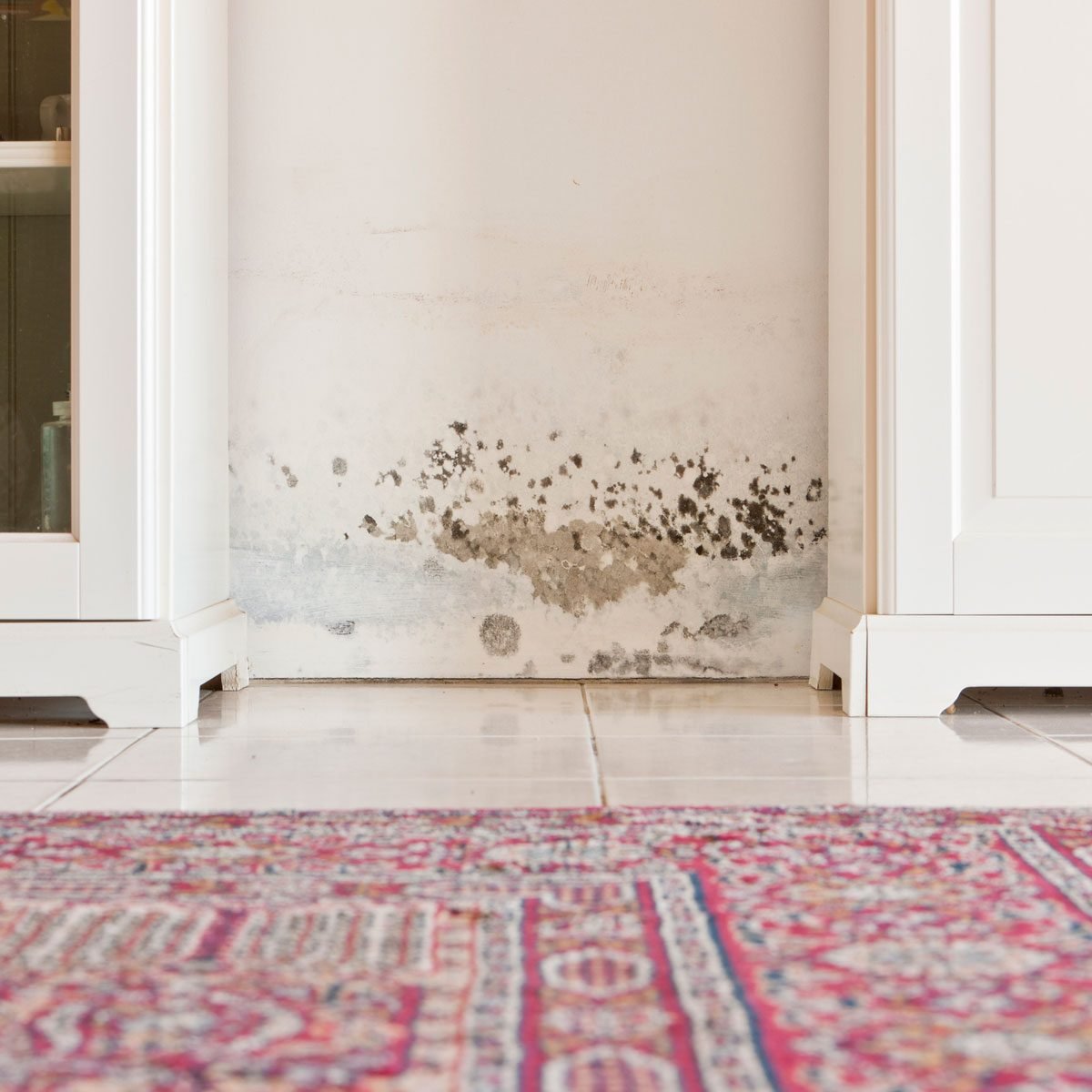
Musty ground-floor apartments, poorly ventilated bathrooms and dank basement laundry rooms are all potential petri dishes for growing ugly and unhealthy mold and mildew. Interior and exterior paints or primers containing antimicrobial properties can help keep mold under control.
Mold, a form of fungus that produces spores that float through the air, thrives in moist, warm environments. Mold and mildew produce allergens that, when inhaled or touched, can cause allergic reactions and trigger attacks in asthma sufferers. According to the Environmental Protection Agency (EPA), “The best way to control mold growth is to control moisture.”
Here are some useful steps for dealing with mold in and around your home:
Find the source of the moisture. Don’t forget to look for hidden leaks in walls and under kitchen cabinets.
Clean infested areas with detergent and water.
After cleanup, let surfaces dry completely (allow 24 to 48 hours).
Repaint the area with a mold-resistant product.
Prevention
Install fans in bathrooms, leave windows open whenever possible, use an exhaust fan when cooking and run dehumidifiers to reduce indoor humidity.
Add insulation to windows, pipes and walls to prevent condensation.
Maintain gutters and downspouts.
Once you’ve taken care of the moisture problem and cleaned the area, here are some top-rated paints and primers to help keep the mold and mildew from returning.
Autistic children have different needs than other kids, so a well-designed bedroom that meets their sensory needs while remaining functional is extremely important.
For kids on the spectrum, their five senses can be hypersensitive, which means some kids get upset if too much is happening around them. They may find a particular noise overwhelming, or a light too bright. If they become overstimulated, they will start stimming (self-stimulation), which is their way of regulating themselves. A bedroom that overstimulates a child on the spectrum also makes it more difficult to get the child to wind down, go to sleep and stay asleep.
“My son would either be up very late, past midnight, or if he did go to bed early, he’d be up at two or three in the morning,” she says. “That’s why their environment and having a bedroom that encourages bedtime is so important.”
Here are Gelormini’s tips for decorating a room that meets sensory needs and invites rest.
Use Soft Lighting With Room Darkening Shades
Some children are oversensitive to sounds and bright lights, and can be bothered by a buzzing light. Gelormini recommends dimmable soft lighting. “I suggest using blackout shades on the windows so the room is nice and dark for bedtime,” she says. “My son broke a few blinds, so I also recommend using the blinds that are in-between the glass.”
Designate Zones in the Room
If the child’s bedroom also serves as a play area, you can designate zones. Assign one area of the room for sleeping, another for storage and another for their favorite activities. “Most of them obsess over what they like, like being on the iPad for hours, so having a comfybean bag chair in the room is a good idea,” Gelormini says.
She also encourages making use of the bedroom closet. “My son used to hide in the closet,” she says. “So I painted the inside navy blue with stars to make it feel like a cozy night sky.”
Choose Calm and Restful Paint Colors
Just like bright lighting, Gelormini says bright paint colors like red, yellow and orange can overstimulate an autistic child and set them off.
“Choose muted colors of your child’s favorite color,” she says. “For example, instead of bright red or orange, go with a toned down shade like clay. You could also choose more calming paint colors like light blue, gray or earthy green.”
An added tip: Gelormini uses an eggshell finish, making the walls easier to wipe clean.
Have Ample Storage to Help Organize
If there’s clutter in the bedroom, especially if you don’t have a designated playroom, it can be harder for the child to decompress and relax. Gelormini says to try to contain it with functional storage options. “I would suggest making sure they have a toy chest that everything can be put into at the end of the night,” she says. Aim to keep clutter to a minimum to avoid over stimulation, especially before bedtime.
Keep Safety in Mind When Decorating
Because her son used to yank the wire out of the wall to turn off the light, Gelormini says she made sure there were no lamps in his room. “We had to have the electrician install overhead lighting,” she says.
Many autistic children like to jump a lot and enjoy doing so on their bed. This can be dangerous should the springs start popping through. Gelormini suggests using a foam mattress with a box spring with no bed frame as a safer alternative.
Paint a Mural of What the Child Loves
Whatever your child loves, whether it’s the ocean, stars or a favorite fictional character, paint a mural of it in their room.
Gelormini says her son was obsessed with the ocean, so they painted a mural of it in his room. Whether you paint a mural yourself, get it done professionally, or purchase it like this Finding Dory Wall Mural, a mural helps create a unique space which can help calm and relax your child if they are feeling anxious or are acting out.
According to Michele Vig, founder and chief organizer of Neat Little Nest, “An entry table can give individuals and families a place to drop critical items like keys or mail right when they come into the house, making them easy to find when you need them.”
Here are some ways in which an entryway (a.k.a. console) table can be a great household problem solver:
Functions as a convenient drop zone (mail, dog leash, etc.);
Stores important things you need on hand (purse, phone);
Showcases a home’s decorative style right off the bat;
According to Michele Vig, founder and chief organizer of Neat Little Nest, “An entry table can give individuals and families a place to drop critical items like keys or mail right when they come into the house, making them easy to find when you need them.”
Here are some ways in which an entryway (a.k.a. console) table can be a great household problem solver:
Functions as a convenient drop zone (mail, dog leash, etc.);
Stores important things you need on hand (purse, phone);
Showcases a home’s decorative style right off the bat;
Lately, my husband and I have been having some heated discussions — about coffee tables. We need a new one, and we can’t agree on the size, style or even the material. Who knew coffee tables could be so complicated?
Coffee tables likely made their way into British and American homes in the late 1800s, although their origins may stretch back much further. Even the ancient Etruscans, who lived in central Italy in the 1st millennium BCE, used low, rectangular tables for their lavish banquets.
When the term “coffee table” emerged in the early 1900s, it was less about coffee and more about being an object around which people relaxed and chatted. By the time televisions became a mainstay of American living rooms, the coffee table was practically a prerequisite, right along with couches and easy chairs.
As I like to tell my husband, a coffee table is a big decision! You’ll probably only buy a new coffee table every 10 years or so, so you want to make sure you buy the right one. Here’s what to consider when choosing a coffee table for your living room.
Why Your Living Room Needs a Coffee Table
Think about it: A coffee table serves multiple purposes in your living room. It’s a place to rest cups or glasses when you’re entertaining friends. It’s a place for books, photo albums, laptops or anything you like having within easy reach. It may be the place to spread out a board game on family game night, or for kids to do their homework.
When there’s something good on TV, it might double as the dining room table. And of course, in some households, it’s a place to prop up your feet at the end of a long day!
Visually, a coffee table pulls together the other furniture in the living room. It creates a unifying effect among the couch, easy chairs or recliners, end tables and usually the TV.
Shapes of Coffee Tables
Coffee tables come in various shapes, some more practical than others. Here are the basics:
Rectangular. The classic coffee table shape is the most practical with a long (three-seater or longer) couch, as it’s theoretically within reach of everyone seated.
Oval. This is a good alternative to a rectangular table. There’s a little less surface area, but also no sharp corners for banging shins!
Square. A square table may be the best solution for smaller couches or more compact living rooms. But it’s typically wider than a rectangular table, so it may not save that much space in the long run.
Round. A round coffee table is also a good solution for a compact living room, or one where couches and chairs are arranged in a U pattern around the table.
Coffee Table Materials
Coffee tables are available in different materials, which vary in functionality and longevity.
Wood. The classic material for tables, wood is durable and versatile. But low-quality wood or wood veneer will show every dent and scratch. And even high-quality wood can show stain marks from drinks, nail polish or whatever else gets spilled on it.
Laminate. Usually cheaper than wood and popular for their durability, laminate coffee tables are available in virtually any color and shape. They can stand up to getting banged up by kids’ toys, but they can also chip — and those corners are sharp!
Glass-top. Usually supported by a metal frame, glass-top tables create a lighter look in a living room, but probably aren’t ideal for homes with small children. Stephanie Engel, an interior decorator and home stager with Minnesota’s Real Estate Bees, says glass coffee tables tend to have a more elegant look, better suited for a formal sitting room than a casual family living room.
Marble or stone. While not as common, marble or natural stone can be used to make coffee tables. The stone tops are usually on a metal or wood base, and they look impressive, but weigh a lot. And watch out for your shins!
Alternative Coffee Table Solutions
If you’re not thrilled with the idea of a traditional coffee table or you don’t have much space, Engel says there are plenty of alternatives. “We frequently recommend tufted ottomans, a group of two or three nesting tables, a vintage trunk, a pair of smaller matching end/side tables, or even garden stools and storage benches,” she says.
How to Choose the Best Coffee Table
When it’s time to choose your next coffee table, Engel recommends taking the following points into consideration:
Size of the space. “Scale and proportion in a space is key,” says Engel. If the table is too big for the room, it’s going to dwarf the other furniture and make the room look crowded. Too small, and it will look like you goofed and ordered the wrong size! Small rooms may also benefit from a coffee table with storage.
Function of the room. How will the room be used? If this is the main family gathering space in the house, Engel says to choose a sturdier, durable material, like wood. For a formal living room that’s only used a few times a year, you can opt for something more decorative.
Size of existing furniture. “Just like the size of the room, the size of existing furnishings should be considered,” says Engel. A coffee table should be ideally one-half to two-thirds the length of the couch, and either the same height or an inch or two shorter.
Furniture shape. Shape of the furniture should be taken into consideration too, especially if you’re not dealing with a “normal” couch. “If a sofa is an L-sectional or a sectional with a chaise, for instance, certain shapes and sizes of table work better than others,” Engel says. With curved sofas, she says a round or oval table might be better suited than one with hard corners.
Price. Most of us have a budget in mind when furniture shopping. If your coffee table is in the social hub of your home, it needs to withstand a lot of wear and tear. “We suggest investing in quality furnishings that will last over time and be less likely to need replacement,” Engel says.
Lately, my husband and I have been having some heated discussions — about coffee tables. We need a new one, and we can’t agree on the size, style or even the material. Who knew coffee tables could be so complicated?
Coffee tables likely made their way into British and American homes in the late 1800s, although their origins may stretch back much further. Even the ancient Etruscans, who lived in central Italy in the 1st millennium BCE, used low, rectangular tables for their lavish banquets.
When the term “coffee table” emerged in the early 1900s, it was less about coffee and more about being an object around which people relaxed and chatted. By the time televisions became a mainstay of American living rooms, the coffee table was practically a prerequisite, right along with couches and easy chairs.
As I like to tell my husband, a coffee table is a big decision! You’ll probably only buy a new coffee table every 10 years or so, so you want to make sure you buy the right one. Here’s what to consider when choosing a coffee table for your living room.
Why Your Living Room Needs a Coffee Table
Think about it: A coffee table serves multiple purposes in your living room. It’s a place to rest cups or glasses when you’re entertaining friends. It’s a place for books, photo albums, laptops or anything you like having within easy reach. It may be the place to spread out a board game on family game night, or for kids to do their homework.
When there’s something good on TV, it might double as the dining room table. And of course, in some households, it’s a place to prop up your feet at the end of a long day!
Visually, a coffee table pulls together the other furniture in the living room. It creates a unifying effect among the couch, easy chairs or recliners, end tables and usually the TV.
Shapes of Coffee Tables
Coffee tables come in various shapes, some more practical than others. Here are the basics:
Rectangular. The classic coffee table shape is the most practical with a long (three-seater or longer) couch, as it’s theoretically within reach of everyone seated.
Oval. This is a good alternative to a rectangular table. There’s a little less surface area, but also no sharp corners for banging shins!
Square. A square table may be the best solution for smaller couches or more compact living rooms. But it’s typically wider than a rectangular table, so it may not save that much space in the long run.
Round. A round coffee table is also a good solution for a compact living room, or one where couches and chairs are arranged in a U pattern around the table.
Coffee Table Materials
Coffee tables are available in different materials, which vary in functionality and longevity.
Wood. The classic material for tables, wood is durable and versatile. But low-quality wood or wood veneer will show every dent and scratch. And even high-quality wood can show stain marks from drinks, nail polish or whatever else gets spilled on it.
Laminate. Usually cheaper than wood and popular for their durability, laminate coffee tables are available in virtually any color and shape. They can stand up to getting banged up by kids’ toys, but they can also chip — and those corners are sharp!
Glass-top. Usually supported by a metal frame, glass-top tables create a lighter look in a living room, but probably aren’t ideal for homes with small children. Stephanie Engel, an interior decorator and home stager with Minnesota’s Real Estate Bees, says glass coffee tables tend to have a more elegant look, better suited for a formal sitting room than a casual family living room.
Marble or stone. While not as common, marble or natural stone can be used to make coffee tables. The stone tops are usually on a metal or wood base, and they look impressive, but weigh a lot. And watch out for your shins!
Alternative Coffee Table Solutions
If you’re not thrilled with the idea of a traditional coffee table or you don’t have much space, Engel says there are plenty of alternatives. “We frequently recommend tufted ottomans, a group of two or three nesting tables, a vintage trunk, a pair of smaller matching end/side tables, or even garden stools and storage benches,” she says.
How to Choose the Best Coffee Table
When it’s time to choose your next coffee table, Engel recommends taking the following points into consideration:
Size of the space. “Scale and proportion in a space is key,” says Engel. If the table is too big for the room, it’s going to dwarf the other furniture and make the room look crowded. Too small, and it will look like you goofed and ordered the wrong size! Small rooms may also benefit from a coffee table with storage.
Function of the room. How will the room be used? If this is the main family gathering space in the house, Engel says to choose a sturdier, durable material, like wood. For a formal living room that’s only used a few times a year, you can opt for something more decorative.
Size of existing furniture. “Just like the size of the room, the size of existing furnishings should be considered,” says Engel. A coffee table should be ideally one-half to two-thirds the length of the couch, and either the same height or an inch or two shorter.
Furniture shape. Shape of the furniture should be taken into consideration too, especially if you’re not dealing with a “normal” couch. “If a sofa is an L-sectional or a sectional with a chaise, for instance, certain shapes and sizes of table work better than others,” Engel says. With curved sofas, she says a round or oval table might be better suited than one with hard corners.
Price. Most of us have a budget in mind when furniture shopping. If your coffee table is in the social hub of your home, it needs to withstand a lot of wear and tear. “We suggest investing in quality furnishings that will last over time and be less likely to need replacement,” Engel says.
The good news is, we’re not stuck in the Stone Age! While tools for trimming back weeds and harvesting crops remained mostly unchanged for thousands of years, today we’ve developed technology to allow us to work far faster and with less effort.
What Is a Weed Whacker?
Weed whackers are power tools that consist of a long handle and a rotating head that spins a string-like “blade.” These blades come in different forms, but the most common is a thin piece of nylon, giving these tools the alternate name “string trimmer,” as well as “weed eater” and “weed whip.”
No matter what they’re called, finding the best weed whacker is all about comfort and how often you use it.
Curved vs. Straight-Shaft Weed Whackers
Much like classic scythes, weed whacker shafts are straight or curved. A curved trimmer will be held at a slightly different angle than one with a straight shaft. Most users find the curved form more comfortable, but that’s not universal. If possible, try out both types to see which is the best fit for you.
Straight shafts also allow for a straight drive belt, which provides more power to the rotor. Cordless string trimmers are typically straight shafted because battery life will drop off when power is lost to the curved drive belt. Straight-shaft weed whackers are also capable of accepting attachments, such as edging or saw heads. They excel at accessing hard-to-reach spots.
Curved trimmers are generally targeted to homeowners who value comfort over power, and to pros who know they’ll be using that trimmer for hours at a stretch. Professional-grade curved models are usually gas-powered to overcome the curved drive belt.
Gas-powered weed whackers are more powerful than electric models. But they also weigh more, and the motor generates vibrations that can cause muscle fatigue. That said, gas-powered weed whackers have a longer run time than most electric models, making them a good pick if you have an especially large yard (an acre or more) or tough vegetation.
If weight is a concern, consider a model with a two-stroke engine, as those tend to be lighter than four-stroke models. (Note that two-strokes run on a gas/oil blend that you’ll need to mix yourself or purchase.)
Electric weed whackers are available in plug-in or battery-powered versions. Plug-ins are the most affordable, but they’re limited by the length of your extension cord. They’re a good choice if you won’t use them often, or expect to be working only in the area directly around your home.
Battery-powered models aren’t constrained by a cord, and higher-end models have power that rivals gas-driven models. Generally speaking, 20V batteries provide less power but are lighter, while 36V or 60V batteries can tackle larger projects.
Weed Whacker Brands
Most major brands of lawn tools produce at least one line of weed whackers. Popular brands include Toro and Honda. Manufacturers of power tools such as DeWalt and Makita also have string trimmer lines. Newer names like Greenworks and EGO often focus on battery-powered options.
Luckily, almost all these lines are available to comparison shop at home improvement stores such as Lowe’s and The Home Depot, as well as other lawn equipment retailers. If you’ll be using your weed whacker frequently or have a large property to maintain, it’s strongly recommended you go to a store so you can feel the heft and balance. If you’ll only be using it occasionally, shop around online for the best possible deal.
Weed Whacker Features
Like most power tools, there are multiple options and features to look for when considering a weed whacker. Some of the most useful include:
Vibration control to reduce arm fatigue, which is especially important on gas-powered models.
Interchangeable heads, available on straight-shaft models, allow you to transform your weed whacker into anything from an edger to a limb trimmer.
Battery interoperability keeps your charging station simple and lets you power multiple tools with the same batteries.
Easy blade replacement is more important the more often you use your weed whacker. You may also consider fixed-length blades, which use pre-cut lengths of string, rather than spools.
Bump feed or bump head allows you to advance the spool of string with a simple tap on the ground, rather than manually drawing out the next length of string.
Weed Whacker Maintenance
All weed whackers need to be wiped down from time to time as the pulpy remnants of cut grass and weeds can clog up the spinning motion.
As you might expect, a gas-powered weed whacker requires more maintenance than an electric version. Plan on annual maintenance such as a tuneup, cleaning, new spark plug and so forth. You can DIY for about $20 a year, or you can pay about $100 at a lawn tool service center.