The 400-watt motor of the Snow Joe electric snow shovel is powerful enough to launch 2,025 pounds of snow per charge, and thanks to its exclusive lithium ion battery system, it runs longer than similar models. Its 12 pound weight and cordless design make it a portable and convenient option perfect for quick grab-and-go shoveling sessions. It’s not as powerful as the best snow blowers, but its whisper-quiet operation and simple controls are an excellent and efficient alternative.
Recently I needed to replace a bad power window motor on a particular vehicle. A few things about the job surprised me. When I went to remove the outer door skin to reach the motor, I discovered the skin was attached to the door frame with an adhesive, not hardware. I had to use a “hot knife” to release the adhesive, then glue the skin back into place.
Today, vehicle manufacturers are assembling vehicles with more adhesives than ever. And at the same time, conventional hardware has improved and evolved. Read on to gain a better understanding of how your automobile is held together.
Mechanical Fasteners
The humble nut and bolt and other standard fasteners have undergone a technical transformation. You no longer find many traditional fasteners like lock washers, cotter pins or loose flat washers in today’s vehicles. Here’s a look at some of the modern fasteners now used in cars.
Torque-to-yield (TTY) bolts
This specialty hardware replaces standard cylinder head bolts. Referred to as one-time use bolts, they stretch during installation. Stretching compromises the bolt’s integrity, so it should not be reused.
TTY bolts are found on aluminum cylinder heads that expand and contract faster than the cast iron blocks they’re bolted to. TTY bolts maintain their clamping load (strength) and resist shear stress (side-to-side movement between parts). These characteristics permit parts to move up and down without sliding on and ruining the cylinder head gasket.
Prevailing torque fasteners (PTF)
Recognized by a tapered (conical) end on one side of the nut, PTFs have replaced lock washers and cotter pins. The taper distorts the threads, leaving zero clearance between them. The generated friction “locks” the bolt and nut threads together. Like TTY bolts, PTL shouldn’t be reused.
Hollow fasteners
To help lower a vehicle’s weight, manufacturers use hollow fasteners in certain applications, like securing plastic and composite components. These course threaded screws are coated with a dry lubricant that allows assemblers to install them with precision torque drivers. However, over-tightening with a hand or power nut driver can be a problem.
Flange nuts and bolts
Flange nuts and bolts have a built-in flat washer, or “flange.” The flange surface spreads the clamping load over a wider area, eliminating the need for flat washers.
Some flange bottoms have bearing-like surfaces. This reduces friction, ensuring precise torquing and a durable connection that won’t weaken from vibrations.
Adhesives (More Than Just Glue)
According to the Center for Automotive Research, in 2001 cars used about 30 liner feet of adhesives. Today, it’s more like 400 liner feet — an increase of more than 1,200%. Adhesives create incredibly strong bonds that keep parts and components from rattling and vibrating loose.
Why are adhesives used?
Today’s vehicles feature more lighter plastic and composite parts than ever. Attaching them with mechanical fasteners isn’t practical. Adhesives are lighter than metal fasteners and improve a vehicle’s structural integrity by covering the full surface area. Bolts, spot welds or rivets must be spaced every two inches, creating uneven stress points.
Using adhesives decreases the likelihood of corrosion from nut and bolt-holes and spot welds, as well as oxidation when fastening unlike materials, like steel to aluminum. Adhesives also offer tremendous resistance to shear stress. This is critical for components operating in high-temperature environments, like drivetrain gaskets and brake pads.
Adhesives are used extensively in electric vehicle (EV) battery construction. It protects individual cells from vibration, seals out the elements and offers excellent heat conductivity.
Where are adhesives used?
Several high-strength adhesives hold your car together.
Hot melt plasticizers and electrically isolating adhesive tapes: Used in high stress areas, like bonding individual chassis components or attaching an EV’s composite battery tray.
Silicone: Adhesive/sealant for high-impact airbags, as well as form-in-place drivetrain gaskets. It protects sensitive electronics from vibration, dust and moisture.
Polyethylene and other injected molded plastic polymers: These are shaped into clips, retainers and rivets to secure trim, wire harnesses, tubing, hoses and glass. They’re also found in bumper covers and inserts that provide impact protection during a collision.
Nylon- and fiberglass-reinforced polymer composites: Fabricated into retaining brackets securing the engine and drivetrain.
Flexible non-hardening butyl adhesives: Adheres to and creates weather-tight seals between plastics, like the heater core housing and airflow duct system components.
Liquid and structural adhesives: Made from the same ingredients as super glue, these bond metal fenders and quarter-panels to composite frames.
High strength anaerobic adhesives: Drying in the absence of air, they bond transmission gears to shafts and bearings into housings.
Anti-vibration foams and films: Made from polyethylene, vinyl or acrylic. Foams conform to irregular shapes and fill gaps, perfect for sound dampening and stiffening hollow vehicle frames and chassis to absorb road shocks. They also seal and cushion electronic components and connectors under the hood.
Various varnished plastics and pressure adhesives: Used for emission, data, safety and information labels/stickers that must last the vehicle’s lifetime without peeling or fading.
When I was little, the arrival of the annual Toys ‘R Us Christmas catalog was one of the most exciting days of the whole year. I’d grab my favorite pink highlighter and excitedly circle everything inside that I hoped Santa would bring me.
I remember my mother laughing when she saw I’d highlighted nearly everything on the page, and her telling me that she wasn’t sure if Santa could fit all of those things in his sleigh.
Now that I’m an adult, the parade of seed catalogs that fills my mailbox every fall is just as much fun. I’ve switched to a red Sharpie now, but I still circle way more than will fit in Santa’s sleigh — or in my garden!
You Need New Seeds If…
To get the most out of your seed purchases, first see what you have left over from last gardening season. Toss last season’s seed if:
The seeds weren’t stored properly. Seeds need to be kept in a cool, dry, dark location to remain viable.
The seeds are more than three years old. The germination rate tends to decrease significantly after a few years even if your seeds are stored properly.
You’ve lost the labels and can’t identify what you have.
There aren’t many left in the packet from last season, especially if the seeds are older and their germination rate will be lower.
They’re moldy or look damaged.
Three Ways To Save on Seeds
It’s easy to over-buy seeds, especially when they cost just a few dollars per packet. Consider going in on a seed order with a friend and split them when they arrive. Did you really need all 25 of those tomato seeds?
You could also join a seed swap to share your extras with others and pick up a few new varieties you’ve wanted to try. Local gardening groups on Facebook are a great place to find seed swaps in your community. Or you could join the Seed Savers Exchange to swap with people around the country. Sometimes the seeds you receive won’t turn out as well as fresh ones, or the variety might be misidentified. But if you’re getting them for free and you’re flexible, it’s certainly worth a try.
You could also harvest seeds from the fruits, vegetables and flowers you’re already growing and save them for the following year. Christy Wilhelmi, author of Grow Your Own Mini Fruit Garden, says she stores her seeds in wide-mouthed screw-top jars. She drops a few silica gel desiccant packets into the bottom of the jar to absorb moisture and stores them in her refrigerator.
Are Inexpensive Seeds from Mass Merchants OK to Buy?
The short answer is, yes. The seed packets you see at local home improvement, grocery and hardware stores are perfectly fine as long as they’re stored in a temperature-controlled environment and their expiration date hasn’t passed.
“Seed racks kept outdoors are exposed to nighttime humidity which is not a good thing for stored seeds,” says Barbara Pleasant, author of Homegrown Pantry and Starter Vegetable Gardens.
“You can find many excellent varieties of vegetable seeds on retail shelves, often at a lower price. Green Ice or Little Gem lettuce seeds from a garden center or mass merchant will be just as good as those you buy mail order.”
The same can be said for popular flowers commonly grown from seed, including zinnias, celosia, cleome, cosmos, marigolds, milkweed, nasturtium and sweet peas. Many can be started under lights indoors so the seedlings are large enough to be transplanted outdoors as soon as the weather warms in spring.
However, if you’re on the hunt for more unusual seeds, mail order sources will be your best bet.
Baker Creek Heirloom Seeds is one of the largest sources for unique and rare vegetable, fruit and flower seeds in the U.S. Pink and white striped Chioggia beets, Japanese winged beans and giant cactus-type fringed zinnias are a few distinctive seeds you’ll find at this one-of-a-kind mail order seed company.
Select Seeds also offers a broad selection of organic seeds, natives, heirloom flowers and unusual flowering vines. They give you the option to purchase many varieties as seeds or small potted plants.
Are Organic Seeds Worth the Money?
If maintaining an organic landscape and eating organically grown produce is important to you, then it makes good financial sense to spend the money on organic seeds.
Wilhelmi starts her own vegetable garden every year from untreated organic seeds. “That means they haven’t been dipped in or sprayed with chemical pesticides, herbicides or fungicides before packaging,” she says.
This detail is especially important for seeds of edible plants. You’ll buy organic strawberry seeds for the same reasons you’ll buy organic strawberries at the grocery store. “Buying organic seeds also means you are supporting organic farms which typically use less water, limit their fertilizer runoff and are better stewards of the soil compared to commercial non-organic agriculture,” Wilhelmi says.
Being a loyal customer is the best way to support those growers.
What to Watch Out For
There are thousands of seeds retailers online. Not all are reputable. Ask your gardening friends for their recommendations, or shop at your local garden centers whenever possible.
If a plant’s picture looks too good to be true, it probably is. Rainbow striped roses and purple watermelons exist only in art, not in the garden. Unfortunately, it’s easy to fool inexperienced buyers with enhanced images.
Do a Google Images search of the questionable plant to see if the pictures from other sellers look similar. If not, don’t waste your money.
Shipping costs can sometimes be higher than the seeds themselves. Check the total in your cart before you get too far. And take advantage of any sales offered to offset the cost of shipping.
There’s something about driving that allows your mind to wander. Maybe you’re considering your dinner plans, or contemplating intriguing questions. Like: Why do you see metal wrapped around trees? Why are there colored squares on toothpaste? And what are those balls on power lines?
You might drive past the same electrical lines daily without knowing the purpose of those colorful spheres. Are they bizarre pieces of public artwork or a scale model of the solar system? Perhaps they’re there to weigh down the power lines that might otherwise blow in the wind.
We learned more about these colorful markers and why they’re strung on power lines across the country. And it turns out, there’s a simple explanation.
What Are the Balls on Power Lines?
Known as marker balls, these indicate where power lines are so low-flying aircraft can avoid them. Also called aerial marker balls or visibility markers, the Federal Aviation Administration (FAA) requires them on power lines that cross canyons, lakes and rivers, as well as those that surround airports.
But why are they different colors? The FAA found aviation orange, white and yellow offer the greatest visibility, but colors must be as conspicuous as possible against the background landscape. That means you might see other colors, depending on where you live.
So the next time your passenger asks, “Hey, what are the balls on power lines for?” you can answer that they’re saving lives.
What Are the Balls on Power Lines Made Of?
For maximum durability and color fastness, the balls on power lines are plastic. Plastic also doesn’t conduct heat or electricity, making it a good electrical insulator.
You might be surprised by their size. Much like a traffic light, these colorful markers are unexpectedly large — between 20 and 36 inches (about the circumference of a basketball). But you wouldn’t bounce anything this heavy. These weigh between 11 and 17 pounds each!
How Long Have Those Colorful Balls Been Hung on Power Lines?
Nearly 50 years.
In the early 1970s, then-Arkansas governor Winthrop Rockefeller was on an airplane with the head of the Arkansas Department of Aeronautics, Edward Holland. Just before the plane landed, Rockefeller noticed electrical wires close to the aircraft. He asked Holland to develop a way to make electrical wires more visible to pilots.
Holland enlisted an engineer named Jack Rutledge to create brightly colored balls that could be placed on electrical and telephone lines without slipping in the wind. By the 1980s, Rutledge’s company had become one of the world’s leading suppliers of visibility markers.
The invention has saved countless human lives in the decades since, but Canadian geese have also benefited. Before the markers came into common use, geese would often fly into or land on power lines. Marking the lines also helped many of our feathered friends.
I grew up in rural northern Michigan. With every heavy snowstorm, my dad spent hours clearing the driveway with his snow shovel. When he finally caved and purchased a snow blower, everything changed! These dad-approved snow blower deals minimize chore time and allot more hours for merrymaking.
Top Snow Blower Deals
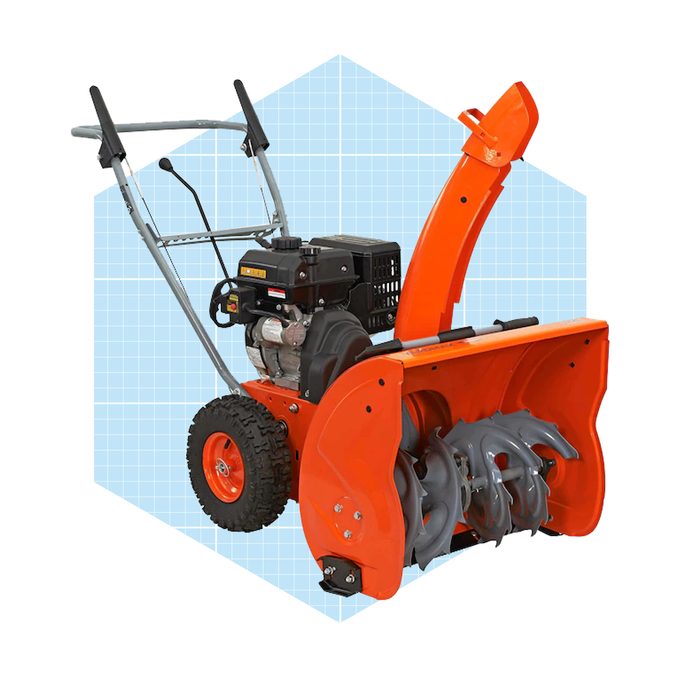
Yardmax Gas Snow Blower
The Yardmax gas snow blower uses gas to plow its way through snow with six different speeds and two backwards blowing options. Evade frustrating fire-up failures with an easy-start, electric push button. The 24-inch snow removal width combined with two-wheel drive for increased traction and one-wheel drive for greater maneuverability give this blower the flexibility to tackle any driveway shape.
Snag this snow blower at Lowe’s during their seasonal sale for $200 off.
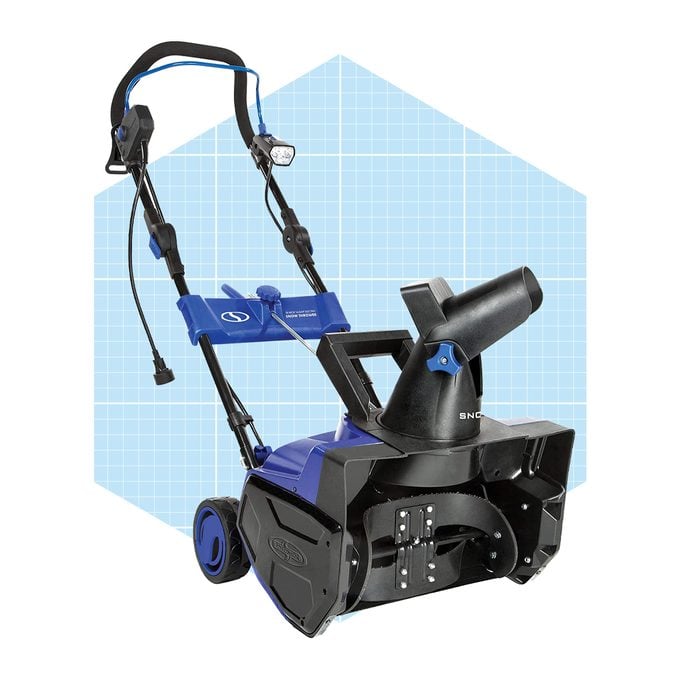
We love Snow Joe blowers—they’re easy to use and of superior quality. Score Snow Joe’s electric snow thrower for 40% off! It doesn’t require gas or tune-ups. An included LED light simplifies nighttime clearing, and a 14.5 amp motor moves up to 650 pounds of snow per minute.
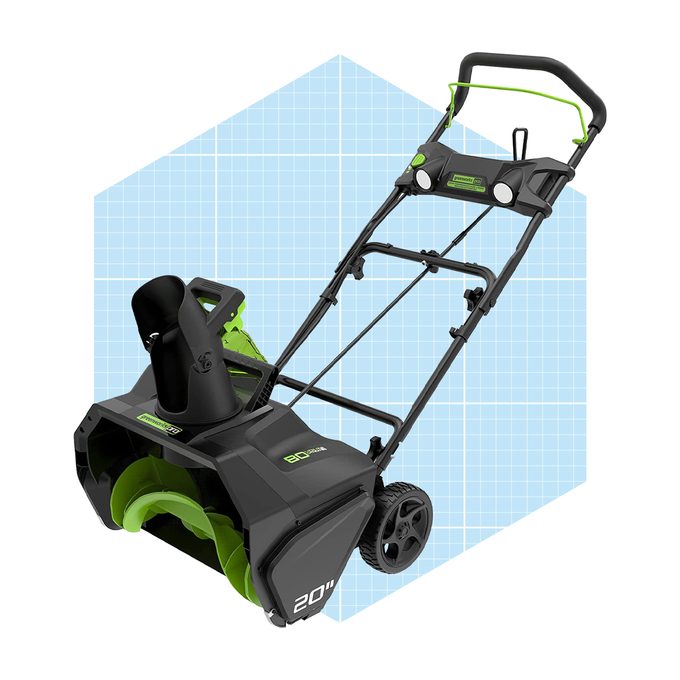
This battery powered Greenworks blower runs for 45 minutes on a single battery charge. The 30-pound compact blower is whisper quiet for late night snow clearance. Nothing stirs—not even a mouse. Get it now for 33% off.
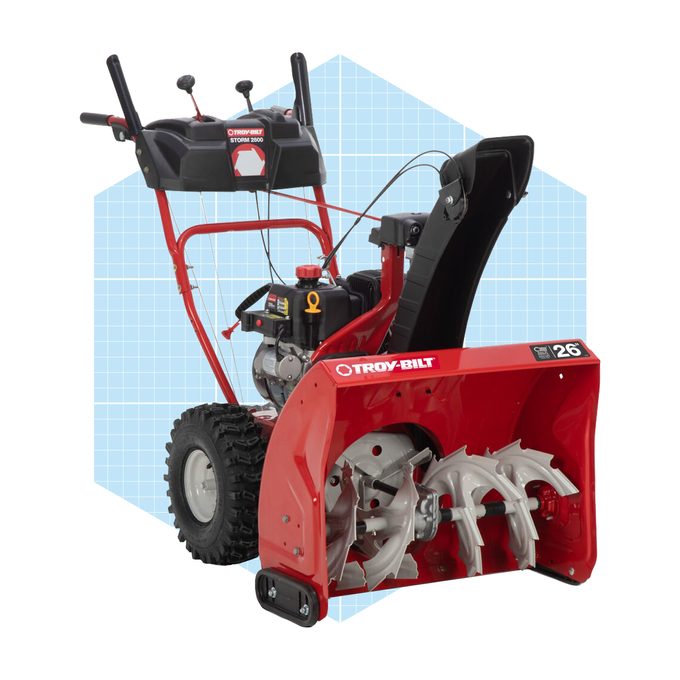
Score a Troy-Bilt storm gas blower for $250 off before the season’s biggest storms roll in. Operate the blower with one hand and adjust chute controls without powering down. Serrated augers pulverize icy snow, and the powerful one-touch start offers a quick startup minus the hassle of pulling a cord.
Snow blowers get marked down several times throughout the year. Some of the best snow blower deals take place around Black Friday. December is an ideal time to upgrade your snow clearing routine because holiday deals affect pricing on winter gear leading up to Christmas.
How do I get the best deal on a snowblower?
Snow blower sales can be difficult to find, but as Sales and Deals Editor, it’s my job to locate mind-blowing markdowns on the best snowblowers. I used my sales eagle eye to sift through hundreds of snow blowers to uncover low prices on the best equipment. Several of my top picks are upwards of $200 off!
How many years should a snowblower last?
A quality snowblower lasts five to 10 years if properly maintained. With excellent upkeep and the addition of other snow removal tools like roof rakes and ice melt, snow blowers may last longer. Get the most out of your snow blower and combine snow blowing with snow shoveling to minimize the stress put on your machinery.
Shop smarter with our expert recommendations for tools, gear and money-saving deals on can’t miss DIY and home products. Sign up for the Stuff We Love newsletter.
It’s finally done. The garlands are hung and the decorations are up. You’re ready to sit back enjoy the Christmas tree and bask in the warm glow of the fireplace and the Christmas lights when suddenly you notice something.
It starts with the smallest of movements, but then you look a little closer. That’s when you notice it’s not just one thing moving around on the tree—it’s thousands of things.
Bugs!
Bugs in your Christmas tree sounds like something out of a horror movie. Luckily, it’s a rare occurrence and the bugs that live in evergreen trees aren’t harmful. That doesn’t make them any less gross, and it’s certainly not something you want to deal with when you’d rather be sipping egg nog.
What Kind of Bugs Live in Christmas Trees?
Obviously, bugs are something you only have to worry about with real Christmas trees. When you bring a tree into the warm indoors, it tricks those critters into thinking that spring has sprung, and it’s time to party. However, they typically don’t live long once the tree is inside.
There are a few different types of creepy crawlers that can get into your tree. It’s helpful to know what they are and how to identify them.
Adelgids: These bugs look like little pieces of snow because of the wax they produce that covers their yellow bodies.
Aphids: If you’ve ever grown tomatoes, you’re probably familiar with aphids. They’re tiny black or brown bugs that look like ticks, except with six legs. They feed on the sap.
Bark Beetles: There’s nothing fab about these things. They burrow into the wood of a tree. They prefer moist wood, so your furniture is safe.
Mites: If there is a bird’s nest in your tree, there could be mites and parasites that live in the nests. These can be harmful, so inspect your tree to make sure there’s not a bird’s nest in the branches.
Pine Needle Scales: If you notice little white sacks on the needles of your tree, those are the eggs of the pine needle scale. When they hatch, they turn into small red bugs, and they can cause needles to fall off.
Praying Mantis: These bugs will sometimes leave their egg sacks in trees, which can start to hatch after a few weeks indoors. They’re not harmful.
Psocids: These are small, winged insects that feed off mold and fungus in a tree. They’ll die quickly inside the house where the humidity is low.
Spiders: Yep, spiders can live in trees. The good news is that the kinds of spiders that live in trees are not harmful. They eat the other insects living in the tree.
How to Kill Bugs in Your Christmas Tree
First and foremost, do not use any kind of bug spray or insecticide. Those are flammable and pose a risk next to the heat caused by Christmas tree lights.
You can leave the bugs and let nature take its course. It’s impossible for most of these critters to live very long indoors. Another option is to spray your tree with neem oil to kill the insects. You can also dust the tree with diatomaceous earth, but that can be dangerous to pets if you use too much of it.
If you see bugs from the tree gathering on the ceiling or in a window, you can just vacuum them up.
How to Prevent Christmas Tree Bugs
An ounce of prevention is really the best method for dealing with Christmas tree bugs. Just follow a few simple steps when you’re picking out a tree.
Give the tree a thorough examination. Look for bugs and check for bird’s nests. If there is a nest in the tree, find another one.
Look for white sacks on the needles or the branches. Those could be adelgids or pine needle scales.
Give it a good shake. A hardy rattle or two will send bugs scurrying for the exits. It’s worth giving it another shake when you get home, before bringing it into the house.
Finally, if you really don’t want to deal with bugs you can always get an artificial Christmas tree.
When projects began stacking up around my house (including some gifts I wanted to build for my friends and family) I decided I needed to upgrade my garage workshop. But feeling the pinch of inflation, I didn’t have the cash to drop on a new $300 table saw or $500 planer. So I did something I normally hate: I went on Facebook.
On Facebook Marketplace, I found most of the tools I needed for a fraction of the price I’d pay for new tools in a store. If you’re just starting out in woodworking and home improvement, buying used tools is a great decision. If you decide the hobby isn’t for you, you’re not suddenly out a ton of money. You can even resell the tools on the same platforms you bought them on and potentially make most of your money back!
Why Buy Used Tools?
Many DIYers are hesitant to buy used tools, but there are plenty of benefits.
Save money
On the first day of browsing Facebook Marketplace for tools, I bought an almost brand-new Craftsman router and table for $70 and a Skilsaw job-site table saw for $50. About a week later, I brought home a benchtop sander for $20. For weeks I searched for an affordable used planer and eventually came to the conclusion that I’d likely have to pay $300 or more. But then I found an older Delta model for sale for just $70. On average, I estimate I spent less than a quarter of the amount on my used tool shopping spree than I would have spent on brand-new tools.
Get better quality for the money
Ask most woodworkers about the quality of today’s tools, and they’ll talk about how the quality was much better 10, 20, or even 40 years ago. A vintage Craftsman or Milwaukee tool might not just cost less than a comparable new tool from a discount tool seller— it could also work better and last longer.
Extend the life of a good tool
Most of the items I bought had sat in dark garages gathering dust for months or even years. Tools are meant to be used! If someone doesn’t buy these unused tools, there’s a decent chance they’ll end up in a landfill at some point.
Help out the seller
Making small talk with the sellers, I discovered many of them needed the cash for one reason or another. One older couple had medical bills, and another person planned to put the money toward funeral expenses for a loved one. If you can help someone out and get something you need at the same time, that’s a win-win.
Tips for Finding Used Tools
Finding quality used tools can be easy. Here’s the strategy that’s worked for me and other woodworkers I know.
Comb the Internet. I’ve bought nearly all of my used tools from Facebook Marketplace, but I’ve also searched my local Craigslist and eBay listings. If you live in or near a decent-sized city, odds are you’ll find the tool you need at a good price.
Attend estate and garage sales. When my dad died a couple of years ago, we sold many of his tools at a garage sale. I kept as many as I could, but I sold the rest for much less than their true worth for two reasons. First, I didn’t have room to keep them all. And second, not being a woodworker at the time, I didn’t really know their value. A lot of people got scorching deals that day!
Ask a friend. If you have a friend who rarely uses their tools, just ask them, “Do you want to sell anything?” Let them know they can borrow the tool whenever they want.
What To Look for When Buying Used Tools
So you agreed to buy a used tool from a seller. Great! But before you shake hands and hand over a bundle of $20 bills, take a close look and ask yourself these questions.
Is it in good shape?
First, do a visual inspection to see if the tool is well-maintained and of good quality. If it’s a power tool, plug it in to make sure it works. Are the cords frayed or split? Does the motor run smoothly or does it sound like it’s on its last legs? If you’re buying a cordless tool, the age of the tool and its batteries is also something to consider. Batteries have a finite life and can be expensive to replace.
That said, sometimes it’s best to accept a small flaw or two if you’re otherwise saving a bundle. I’m still kicking myself for not buying a $200 Rockler dovetail jig for $35 because it had a small nick on one of the end edges. I asked the seller if they would take $20 off because of the flaw, which they declined. By the time I decided to pay the asking price a few hours later, it had been sold to someone else.
Do the accessories come with it? What parts might need to be replaced?
The table saw I bought needed a new blade, which was pretty simple and cheap to replace. I needed to replace the planer knives too, which required me to purchase a specialty tool. Luckily, the cost for these was still a lot less than what I would have paid for new tools. Keep in mind that these small costs can add up quickly.
Does it have a warranty?
A warranty will let you breathe a little easier if you have an issue with a tool in the future. Craftsman Tools’ lifetime warranty remains in effect, in some cases even if you’re not the original owner. Stanley also offers a lifetime warranty on its tools. A quick Google search of your tool and its warranty should give you the details you need.
Buyer Beware
Listen to your gut. If something seems off about either the tool or the seller, walk away. Here are some other potential downsides to buying a used tool.
Saving cash, but losing time
Are you wasting more time searching for a good price on a tool than if you bought it new? Don’t forget to add in the amount of time you’ll spend driving to and from the seller’s home.
Missing safety equipment
Some older tools don’t have modern safety features. The table saw I bought didn’t have a blade guard or kickback pawl. After doing some research, I still don’t know if it’s possible to retrofit it with either. If I had to do it over again, I’d probably keep looking for a safer saw. But because I already bought it, I’ll just continue being extremely careful.