Meal Prep Delivery

Tuesday, December 6, 2022

Should Price Be the Determining Factor When You Buy Plants?

When I was a new gardener and every penny mattered, I looked for the least expensive flowers to fill my porch pots. I had yet to learn why some plants cost more than others, and more importantly, why some flowers were worth more.

Now that I’ve been working in horticulture for more than 20 years, I know the price should be only one of many factors I consider when buying plants for indoors and outdoors.

How Is The Price of a Plant Determined?

Many factors go into the retail price of a plant, including several you may not have considered. The base price of plants includes what it costs to produce, package and ship them to garden centers.

Beyond the base price, here are a few conditions that can impact the price:

  • Was it grown organically? These cost more to produce, so they sell for higher prices.
  • Is the plant in high demand? The principles of supply and demand apply just as much to your Pink Princess Philodendron as they do to your Apple Watch.
  • Is the plant patented? The price includes the royalties paid to the breeder and company that patented them, so they are typically priced a little higher than non-patented plants. You’ll know it’s patented if you see the words “Unauthorized propagation is prohibited” on the label. Most new plants introduced today are patented.
  • Do you shop in a high-rent district? Expect to pay more in municipalities that are more expensive to live in.
  • Are you buying via mail order? Shipping costs can be hefty for live plants.

Save or Splurge?

Sometimes, it makes sense to save money by starting with smaller plants. Other times, it’s better to splurge on larger, more mature plants. Here’s how to know when to save or splurge.

If you’re using a plant to establish structure in a new garden, create a living screen or fill out a container quickly, go ahead and splurge on larger plants. If you’re adding a plant to a mature garden bed where small seedlings would easily get swallowed up, start with larger plants. In these cases, splurge as much as you can to achieve the effect you’re going for right away.

If patience is one of your virtues and you have plenty of time to watch plants grow and mature, save money by starting with smaller ones. Use common sense here. You wouldn’t start an evergreen hedge from seed because it would take decades to mature, but you could easily start flowering perennials from small starter plants.

For potted houseplants, I typically start with smaller ones, not only to save money but also because I like to watch them grow up close. Should you splurge on that $350 cutting of a variegated Monstera you saw on Instagram? If you have a bright green thumb and the perfect growing conditions, it’s worth a try. If not, save your money.

“The pandemic has caused tropical plant prices to skyrocket,” says Sheri Ann Richerson, a blogger at Exotic Gardening. “People pay more for a cutting than what they used to pay for the entire plant. If the consumer demand lets up, prices will fall back in line with where they should be.”

Use patents as an indicator of the quality of the plant’s genetics. It’s costly for the company introducing a new plant to patent it, so only their most valuable plants are worth the effort. You may spend more on them, but they’re worth more. Cheaper varieties of non-patented annuals and perennials don’t always perform as well as their patented counterparts.

Three Ways to Save Money on Plants

One can never have too many plants! We just need to be smart about how we buy them. Here are three things you can do to save on plants so you can buy more:

  1. When buying potted perennials, look for those you might divide if there are multiple crowns or shoots on the plant. Your careful observations could net you a two-for-one deal. Or wait for a plant to multiply in your garden, then divide it.
  2. Inspect the plant carefully before you buy to make sure it appears healthy. Look for signs of new growth, vibrant color, new buds forming and branches that aren’t crossing or rubbing together. In the long run, a healthy plant will save money on fertilizer, insecticides, fungicides and any other products you might need to nurse a sick one back to health. Plants that look half dead purchased on clearance could end up costing you more than a full-price healthy plant in the long run.
  3. Take advantage of store sales, coupons and loyalty programs. Sales often occur during the slower times of year for garden centers, like midsummer and fall. By collecting loyalty points at one of my local garden centers, I bought a beautiful $160 Japanese maple tree for only $25!


Article source here: Should Price Be the Determining Factor When You Buy Plants?

8 Subscription Services To Make Your Home Happier

Plant Subscription Ecomm Via Heyhorti

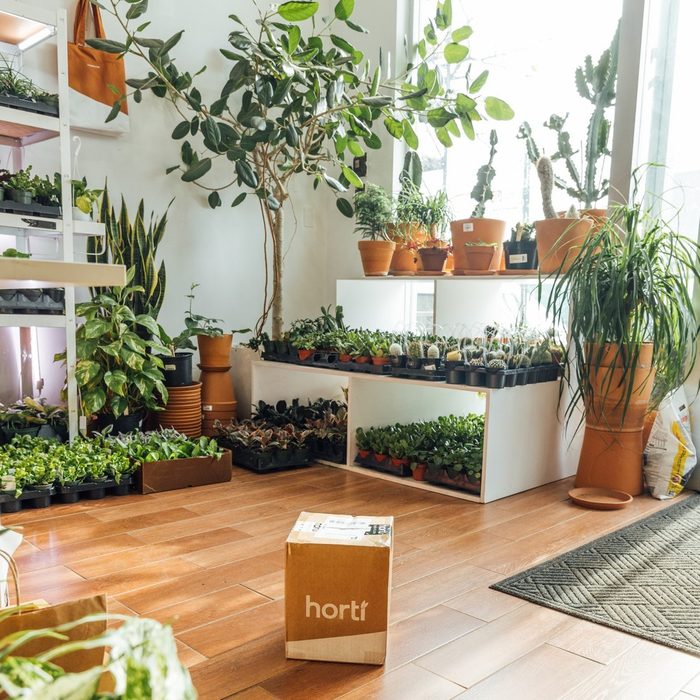
Plant Subscription Box from Horti

Houseplants are proven to reduce stress and improve focus, plus they just make us happy. Horti’s monthly houseplant subscription helps you stock a flourishing plant oasis to brighten your home and your overall outlook on life.

Subscriptions include good choices for plant beginners, people with pets and those with rare tastes. One month you might get a surprise philodendron pink princess, and the next a dragon scale or aloe. Care instructions and tools are included, and the service is available nationwide.


Article source here: 8 Subscription Services To Make Your Home Happier

How To Start Decluttering When It Feels Overwhelming

We’ve all been there. The mountains of mail, the overstuffed closet. From tools to toys, clutter just becomes part of the background. Even the neatest among us accumulates a lot of stuff. When do we do something about it?

“I think you know in your gut that it’s time to start letting go,” says Mary Cornetta, chief executive officer of Organized Overall. “[It’s time] when the clutter really starts to stress you out, you’re misplacing things more frequently, and the floors and countertops are starting to disappear.”

But knowing you need to declutter and actually decluttering are different things. It’s hard to take that first step because the task seems so overwhelming. It’s not hopeless, though. If you’re ready to start, Cornetta’s expert techniques will get you on the path to organization, without the stress.

Start With the Easy Stuff

The first things to go? “Anything with an expiration date,” says Cornetta, who also founded and owns Sort and Sweet professional organizers.

Getting rid of “no-brainer” items like expired medicines and stale food works wonders for your confidence. Open up your medicine cabinet and check the bottles and boxes. Next, tackle the pantry. Ditch anything expired or empty.

“As you gain confidence in your decluttering skills, you can move on to a space like your closet,” says Cornetta. It’s hard to part with our things, so it pays to start with something that doesn’t require much thinking. If it’s out of date, get rid of it — no decision-making needed.

Pick a Small Space

Cropped Hands Of Person Preparing Food On Table

Another way to jump into decluttering is starting small.

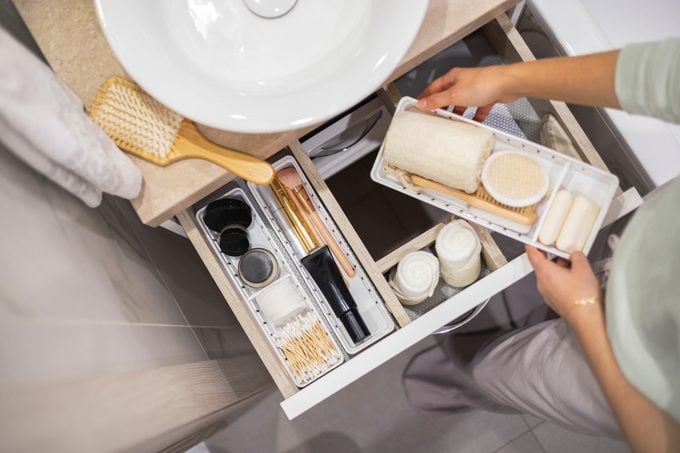
Most of us have a junk drawer in the kitchen, or several. Cornetta says decluttering a small space like a drawer, your purse or a backpack is a great first step, especially if you don’t have a lot of time. “Doing a little decluttering is better than doing none at all!” she says.

So take 15 minutes and go through your sock drawer. You’ll feel better and gain confidence to tackle bigger spaces.

Bring in a Friend

Friends are there for us through thick and thin — job changes, breakups and the daily grind of life. If you’re feeling overwhelmed about the prospect of decluttering your home, enlist a buddy to help.

This works great for people who work well in teams, says Cornetta. And if a friend won’t tell you those old jeans have to go, who will?

Professional organizers are an option too, Cornetta says. And don’t overlook your family members. “If the clutter is your partner’s or kid’s, it’s really important to include them,” she says. “Not only is it their stuff to make decisions on, it takes the load off of only you.”

Make a Schedule

If you’re eager to declutter but can’t seem to kick-start the process, Cornetta recommends scheduling dates on your calendar. Scheduling declutter days will keep you from backsliding, too. Clutter seems to magically accumulate, but knowing there’s a declutter date around the corner can ease your mind.

“Look at the year ahead and schedule two closet decluttering days, four for skincare, makeup and medicine, and monthly or bimonthly sessions for the pantry,” Cornetta says. Choose a schedule that makes sense for you and stick to it.

Make Your Bed Every Day

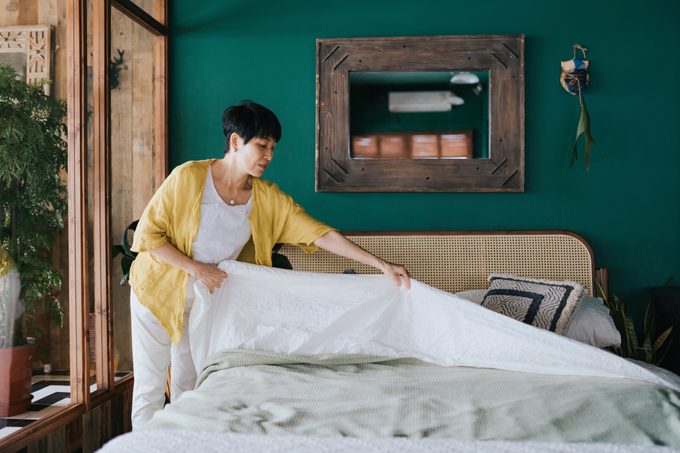
Senior Asian woman doing her morning routine, making up her bed at home. Let's get the day started

Do you make your bed? It’s a great way to get you in the right frame of mind for decluttering and staying organized, says Cornetta. “This simple 60-second act will set the tone for the rest of your room (and day),” she says.

Most people make their beds at least some of the time, according to the National Sleep Foundation. If you’re one of the bed-making majority, make the effort to do it every day to give yourself a boost. And if you’re not, it’s a great time to start.

Declutter Regularly

If you’re struggling with clutter and need another incentive to streamline, here’s a tip: If you can make it part of your routine, over time you’ll reduce your workload around the house. A clutter-free home means less time spent cleaning and searching for things.

“Having less stuff means having less to clean up or tidy,” Cornetta says. “Decluttering regularly is really the most powerful way to stay organized.”


Article source here: How To Start Decluttering When It Feels Overwhelming

Monday, December 5, 2022

The Eleven Percent: Meet Renee Wilson, Insulation Contractor/Owner

This FH series introduces readers to a few of the women who make up 11 percent of the construction workforce in the U.S., spotlighting stories of their careers in the field. Know someone we should feature? Email us here.

Renee Wilson is passionate about insulation. She was first introduced to it in the fifth grade, when her dad founded their family business. Through the years, she helped him on installation jobs and bookwork. By the time she was in her 40s, he handed her the reins. Now, she’s his boss.

“We’re lucky because my dad and I have a really special relationship and communicate well,” she says. “And I’m lucky because I love what I do. I love helping people stay comfortable in their homes.”

Wilson’s southern Wisconsin-based company, Rockweiler Insulation focuses on single-family new home construction as well as retrofitting existing houses. We asked Wilson for her thoughts on the state of the insulation contractor business.

Q: What’s it like being a woman in your trade?

A: When I first started out, I was treated like the girl who opens the mail or the office secretary. People didn’t believe I knew what I was talking about. That still happens every once in a while. Like I’ll answer the phone, and they’ll ask for the person in charge.

But I’m 50 years old and have been doing it for so long, it doesn’t bother me like it used to. Now I just feel like I’m educating people. I’m part of their learning and growth process.

Q: You were featured on the show Treehouse Masters. Any other cool projects that stand out to you?

A: Yes, the installer I sent was really stoked to participate and watch the episode. Even though the insulation part was just a blip in the whole thing, you could at least see the pink wall.

We also worked with the nonprofit International Crane Foundation when they were renovating their visitor center and bird houses. It was interesting to work with the birds. And our team also had to take extra care to clean up all of the insulation, so the birds didn’t eat any.

We also work with Habitat for Humanity. And through our supplier, Owens Corning, [we] partner with the Gary Sinise Foundation to build homes for wounded veterans. We’re really excited to be part of that. I’m making sure every person on our staff gets to be involved somehow, just because it’s such a rewarding project.

Q: Staffing is such a challenge in the trades and beyond right now. How is your company faring?

The Rockweiler Team Waving the parking lot outside their building

A: We had some attrition during COVID, and also just people aging out. Being an insulation installer isn’t easy on your body, so not many people are knocking down my door wanting to do it.

But we also have a strong team. I walk around and chat with everybody at the beginning and end of the day to see how everything is going, both on the job and in their life. I like them to feel like they’re part of the family. And being a small family business, we’re able to be nimble with our decision-making and really take care of our employees.

One of my greatest challenges is trying to figure out how to make it attractive to energetic and smart younger people. Insulation is not a sexy industry. Plus, it’s something that people overlook all the time because it’s hidden behind a wall.

Q: What are your selling points for the job?

A: When I ask my crews why they like the trade, the number one answer is that they’re helping people be comfortable in their homes.

Plus, with climate change, we need to all do our part to decrease our carbon footprint, and insulation is the way to do that. So I’m framing it that way, putting recruitment flyers in high schools and work centers, and letting people know what skills they’ll learn if they work with us.

With that I also hope to get more women in our industry, especially out in the field on the install side. That’s important because we solve problems differently and we are intuitive, which means we can sometimes understand a homeowner’s concerns a little bit better.

Q: What’s your advice for young people wanting to get into the trades?

A: When starting any career, always be learning and be curious. Ask questions and talk to as many people as you can. I still love learning about this industry, going to conferences and reading books. It’s always changing.

Then, as a woman in the trades, my recommendation is to network, network, network. Use as many resources as possible. Join trade associations. Get that support system in place so you can do the best job possible.

Q: What’s in your tool bag?

tools on the floor of a house in the process of being built

A: For insulation, obviously there aren’t a whole lot of tools, so the biggest thing is making sure you have good material. We use Owens Corning, especially their new Pink Next Gen batt. We like it because it’s more rigid, easier to cut and faster to install, because the guys aren’t constantly trying to make it fit in and fluff out.

In Wisconsin, we have to put up a vapor barrier over the insulation, so having a really good stapler makes the job a lot easier. Then, stilts are important. We use Dura-Stilts.

And, of course, our PPE [personal protective equipment] is really important. Everyone here wears N95 masks while they’re installing. That got a little tricky during the pandemic, when all of a sudden we couldn’t get them, but now everything is back to normal.

Finally, we also like Hyde batt knives and Hilti foam dispensers.

Renee Wilson Bio

Wilson earned a bachelor’s degree in business administration with a focus on human resources and management before going to work for Rockweiler Insulation, the family business, in southern Wisconsin.

She’s a board member for the Owens Corning’s Certified Energy Expert (CEE) program, which supports contractors with training and warranties. She also serves on the board of the Insulation Contractors of America, and is a past chapter president of the National Association of the Remodeling Industry.

Writer Karuna Eberl Bio

Karuna Eberl is a regular contributor to FamilyHandyman.com. She spent the last 25 years as a freelance journalist and filmmaker, telling stories of people, nature, travel, science and history. Eberl has won numerous awards for her writing, her Florida Keys Travel Guide and her documentary The Guerrero Project.


Article source here: The Eleven Percent: Meet Renee Wilson, Insulation Contractor/Owner

Don’t Throw Out a Single Strand This Season With This Christmas Lights Repair Tool

It’s one of those classic holiday moments when you hold your breath and cross your fingers—plugging in the Christmas lights you carefully packed away last year. That was back when every light turned on without fail, and as luck would have it, now there are a couple of pesky ones that won’t comply. But before you turn into the Grinch, save the day (and save yourself a headache!) by fixing it right on the spot, thanks to this Christmas lights repair tool: the LightKeeper Pro.

This clever device repairs your unlit bulb faster than you can say, “Merry Christmas!” Find out how this tool can save the day, and put the merry back into your merry-making.

What Is The LightKeeper Pro?

The LightKeeper Pro is an incandescent light set repair tool that fixes Christmas lights that won’t turn on. This handy device comes with everything you need to get the job done: a bulb tester, fuse tester, audible voltage detector, 10 replacement bulbs, three batteries and a storage compartment.

Pros

  • No assembly required
  • Works on pre-lit Christmas trees, icicle light sets, wreaths and garlands
  • Lifetime warranty
  • Fewer tossed light sets means less environmental waste

Cons

How to Use the LightKeeper Pro

This Christmas light repair tool has two different ways to repair inoperable lights. With the Quick Fix method, start by removing any bulb from the unlit strand. Next, plug the LightKeeper Pro into the light set and pull the trigger. This sends a pulse through the light set, locating the faulty bulb and fixing its shunt.

If that doesn’t solve the problem, use the included Audible Voltage Detector, which lets you see where the electricity has stopped flowing. Lay out the light strand and run the LightKeeper Pro back and forth across the strand. A continuous beeping sound detects voltage; when the beeping stops at a certain bulb, that signals an electrical flow issue. Next, remove the bulb in question and plug it directly into the tester. Once the bulb lights up, add it back to the light strand and you’re good to go!

The Best Amazon User Reviews

Verified Amazon user Fuzz used this tool on his pre-lit tree and garland. “The garland, which was half-lit, clicked on after one try,” he writes. “The tree took more time to test and figure out, but at the end of the night…every light is back on.”

“Incredible gadget—it worked quickly to resolve multiple issues!” writes another happy customer, Dave. He adds: “Sound like a fix it tool that is too good to be true right? Well it is true and the Light Keeper Pro does everything they say, it made our old artificial tree look brand new again. $20 well spent for a great tool that will likely get more use in years to come. A+ for sustainability too!”

Where to Buy the LightKeeper Pro

Lightkeeper Pro® Incandescent Light Set Repair Tool

The LightKeeper Pro is currently listed for $29.99, and available for sale at Amazon, Walmart and Target. When it’s time to light up this year’s tree, get yourself an early Christmas present and treat yourself to the LightKeeper Pro.

Shop Now

Shop smarter with our expert recommendations for tools, gear and money-saving deals on can’t miss DIY and home products. Sign up for the Stuff We Love newsletter.


Article source here: Don’t Throw Out a Single Strand This Season With This Christmas Lights Repair Tool

Friday, December 2, 2022

Half Christmas Trees Are the Perfect Way to Save Space This Holiday Season

Christmas trees are a major symbol of the holiday season, but not everyone has the space to set up a whole tree, even if it’s artificial. Over the years, the popularity of one space-saving option has increased among people who live in small living spaces: artificial half Christmas trees.

What Is a Half Christmas Tree?

If you haven’t caught the trend yet, a half Christmas tree is a tree thats’s designed to look like it’s cut in half vertically. Imagine splitting a pine tree’s trunk into two vertical sections and keeping just one side of the tree. This genius idea has taken the artificial tree market by storm.

The half Christmas tree popularity boom is easy to understand: an artificial half tree still looks like a regular pine tree but takes up half the size. Therefore, you can nestle it easily into a corner or against a wall.

Half Christmas trees are artificial and come in natural or flocked versions. You can find pre-lit trees touting LED lights and pine cones, like this Home Heritage Flocked Half Christmas Tree, while other offerings are a blank canvas for you to decorate.

Benefits of a Half Christmas Tree

Why would anyone buy a half Christmas tree instead of a full-sized one?

  • It saves space: The size is the most obvious advantage of using a half Christmas tree. If you have a small space, you may not be able to fit a full-sized option. With a half tree, you can still enjoy the look of a full tree and fit it into a corner or against a back wall without it interfering with your walkway.
  • Less to decorate: If you love having a Christmas tree but hate how long it takes to decorate a full-sized one, the half tree comes in clutch. You only have to decorate half of the tree, but it’ll still look warm and inviting. You’ll save money on buying new bulbs and decorations this way, and you might even skip stringing up the lights altogether if your artificial tree comes with lights.
  • It’s budget friendly: Lastly, you may even find that many half artificial Christmas trees are on sale at much cheaper prices than their full-sized counterparts.

How to Set Up a Half Christmas Tree

Setting up a real Christmas tree requires a Christmas tree holder, a spacious spot on the floor, and an optional tree skirt. Not to mention, you also need to lift a heavy full tree to get it into the stand. A half Christmas tree doesn’t require the same process. Depending on which type of half tree you buy, you’ll either set it up with an included floor stand or mount it to the wall. Since it’s half the size, it’s half the fuss setting up!

When you’re ready to decorate, try out these Christmas tree ideas that will brighten up your home.

Where to Buy a Half Christmas Tree

You can find half Christmas trees at many retailers like Amazon, Wayfair and Kohls that ship straight to your door.

Shop Now


Article source here: Half Christmas Trees Are the Perfect Way to Save Space This Holiday Season

Thursday, December 1, 2022

8 Best Basement Lighting Ideas for a Remodel

Layers Of Light Via Amykalikowdesign Instagram

Layers of Light

Use multiple sources of light to make a dark and windowless basement more inviting. In this space by @amykalikowdesign wall sconces, recessed lights and one large ceiling fixture all work together to bring layers of light to the room.

“I wanted something interesting that gave off great light,” Kalikow says. “This oversized flush mount was the perfect fit for the space — modern, timeless and fun.”


Article source here: 8 Best Basement Lighting Ideas for a Remodel

Smart Ways to Use Citric Acid Around the Home

Citric acid is a surprisingly powerful natural cleaner. Popular in Europe, this versatile product is great for removing limescale, hard wate...