Meal Prep Delivery

Thursday, November 3, 2022

The Best Black Friday 2022 Refrigerator Sales for a Kitchen Refresh

With any luck, refrigerators last several years. However, replacing them is necessary for more space—or if the refrigerator stops cooling. If there’s a new fridge on the Christmas list, don’t panic—buying this major appliance doesn’t have to throw a wrench in the budget! We looked through hundreds of pre-Black Friday refrigerator sales to find top quality brands at the best markdowns.

Seeking a mini-fridge for the office or a full-size upgrade? As expert shoppers, we have you covered! Here’s a tip when refrigerator hunting: Always compare different retailers when looking for the best sales. A fridge that’s pricey at Home Depot is sometimes discounted at Walmart. Shipping is also a factor to consider—Amazon Prime customers receive free shipping on orders fulfilled by Amazon, even on appliances.

Below are this Associate Shopping Editor’s top picks! Don’t wait to purchase—these cool savings won’t last long!

Best Black Friday Refrigerator Deals

Samsung Bespoke Customizable Refrigerator

Bespoke 24 Cu French Door Customizable Refrigerator Ecomm Via Wayfair.com

We love smart refrigerator sales, and the Samsung Bespoke refrigerator is a top contender in the smart fridge olympics. This Wi-Fi enabled fridge offers a calendar, doorbell integration, music streaming and even allows a peek inside without opening it! In addition, the Bespoke line of appliances is totally customizable thanks to front panels that switch out to match any decor. Upgrade mealtime for $1,400 off on Wayfair. Don’t hesitate—Wayfair’s sales sell out fast!

Shop Now

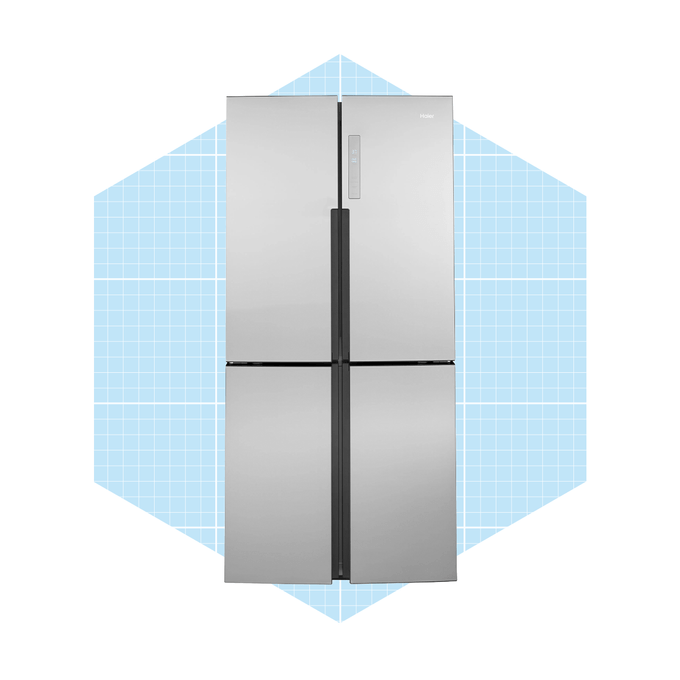
Quad Door Refrigerator

Haier Quad Door Refrigerator Ecomm Via Wayfair.com

For 37% off on Wayfair, score a quad door refrigerator that keeps produce fresh. Two crispers—one that allows for high humidity and one for low—give this fridge flexibility when storing fruits and veggies. It’s also not as deep as a traditional fridge, so it stays flush with the countertop. As a bonus, leftovers don’t get pushed to the back and forgotten. Those in the market for a kitchen upgrade shouldn’t miss this sale!

Shop Now

Mini Beverage Fridge With Glass Door

Euhomy Beverage Refrigerator And Cooler Ecomm Via Amazon.com

Perfect for entertaining, this whisper-quiet glass-front mini fridge is compact enough to install under a counter—yet it fits up to 120 beverage cans! Easily maintain optimal temperatures with the LED digital temperature display so beers stay cool and never frozen. Currently 40% off and highly rated on Amazon, take advantage of this refrigerator sale for a home office or patio before it’s out of stock.

Shop Now

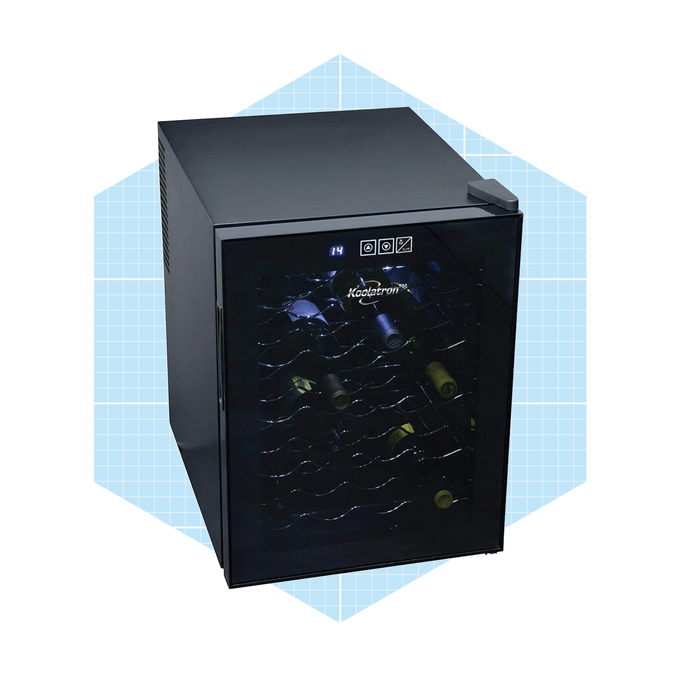
20-Bottle Wine Cooler

Koolatron Freestanding Wine Refrigerator Ecomm Via Wayfair.com

More of a wine person than a beer person? This 20-bottle wine cooler, listed at Wayfair for a savings of over $80, gives a little class to the kitchen. Touch control temperature monitoring and a UV protective door protect vintage wines from environmental factors. A handy display light shows what’s available without opening the door. Perfect for any wine lover, add it to your cart before the sale ends. Right this way to chilled sparking wine in time for the New Year!

Shop Now

Portable Mini Fridge

Nxone Mini Fridge Small Refrigerator Ecomm Via Amazon.com

College students aren’t the only ones that appreciate small appliances—this portable mini-fridge is a clever option for those who are always on the go! Insert the power adaptor into a car’s cigarette lighter and this fridge keeps beverages cool on a road trip or at the beach. Now 39% off on Amazon, pick up this small-but-mighty unit for medication, beauty products or beverages before the refrigerator sales end!

Shop Now

What To Consider When Buying a Refrigerator

FAQs

Who has the best refrigerator deals?

For the best deal on refrigerators, check multiple retailers. Amazon is an affordable place for finding refrigerator deals since Prime has free shipping. Lowes, Home Depot and Best Buy also frequently offer sales, along with any retailers in this list.

When do refrigerators go on sale?

Refrigerator discounts are deepest around Black Friday, but keep an eye out for clearance refrigerator deals and score big savings year round. This year, merchants started sales early with discounts starting in early November and rolling through Cyber Monday.

Shop smarter with our expert recommendations for tools, gear and money-saving deals on can’t miss DIY and home products. Sign up for the Stuff We Love newsletter.


Article source here: The Best Black Friday 2022 Refrigerator Sales for a Kitchen Refresh

Wednesday, November 2, 2022

How To Grow Hellebores for Winter Blooms

Every winter, beginning around Thanksgiving, I look for flower buds on my Christmas Roses, a type of hellebore that blooms in the winter. Then in early spring I look for flowers on my Lenten Roses, another hellebore that blooms well before many perennials have even started to show new shoots.

What Is a Hellebore?

Hellebores are perennial flowers in the plant genus Helleborus. Most of the hellebores we grow in our gardens today originated in Europe and Turkey. Unlike other perennial flowers, hellebore leaves stay green throughout the winter, and they bloom in winter or early spring.

We call winter-blooming hellebores Christmas Roses, and those blooming in early spring Lenten Roses. But they aren’t members of the rose family. They belong to another family, Ranunculaceae, which includes delphiniums and clematis.

Because the roots, shoots and stems of hellebores contain a toxic substance, deer don’t eat them, pleasing many gardeners.

Types of Hellebores

Two types of hellebores are most commonly sold.

  • Helleborus niger is the Christmas Rose. Hardy in U. S. Department of Agriculture Plant Hardiness Zones 3 through 8, it grows about a foot tall and wide. Most have white blooms and may begin to bloom in December, even under snow cover. ‘HCG Josef Lemper’ and ‘Potter’s Wheel’ are two named varieties. A closely related hybrid, ‘HGC Cinnamon Snow,’ also blooms early, with pink buds that open to become white flowers. Occasionally you may see them for sale as blooming potted plants during Christmastime.
  • Helleborus orientalis and Helleborus x hybridus are considered Lenten Roses. Hardy in Zones 4 through 8, they also grow about a foot tall and wide. They begin to flower in early spring, in colors from green to white to pink, red and purple. For a particular flower color or type, choose a named variety. Buy them from an online nursery if your local garden center doesn’t carry them.

When To Plant Hellebores

Plant hellebores in spring or in early fall so they become established before cold weather. Hellebores may take several years to settle into their new garden spot, but once established they’ll live a long time.

If conditions are right, some hellebores may even self-sow. If you find seedlings around the base of your established hellebores, dig them up and replant them elsewhere. Keep in mind their flower colors, especially for Lenten Roses, may not be the same as the original plant.

If you purchased a blooming Christmas Rose as a potted plant in December, you can plant it out in your garden in the spring. Once it finishes blooming, keep it growing indoors by putting it in a cool spot. Be careful not to overwater it.

Before planting, harden it off by putting it outside in a protected spot for a short time on warm spring days. Then gradually increase the outdoor exposure. Plant in the garden after the last threat of a hard freeze has passed.

Where To Plant Hellebores

Hellebores prefer part-shade to full-shade and well-drained soil. Any location that protects them from winter winds is ideal.

How To Plant Hellebores

Once you’ve found a suitable location, plant your potted hellebore at the same depth it grew in the pot. Keep it well-watered until it becomes established. Be sure to give it room to grow.

What To Do With Hellebores in Summer

In summer, you don’t need to do anything. They’ll form a green mass of leaves and stay green through winter.

In winter and early spring, watch for flower buds to form. At that time, carefully remove old foliage to give the flowers room to grow and be seen. Wear gloves to protect your skin from the sharp edges on the leaves and the toxins within them.

The plants will look a little rough after cutting back the foliage. But in a matter of weeks, as the flowers form and new foliage grows, they’ll recover and look great.


Article source here: How To Grow Hellebores for Winter Blooms

The Basics of Woodturning

I started woodturning five years ago because I wanted to make rolling pins for lefse, a traditional soft Norwegian flatbread.

In researching my second book on lefse, Keep On Rolling!, I learned of a guy in the early 1900s who made more than 150 lefse rolling pins for Norwegian-American bakers in his region. I wanted to be like him — not just making reliable standard pins but functional pieces of art, using handsome hardwoods as well as woodturning tools and techniques.

That’s what I’m doing today, along with four other members of the Minnesota Woodturners Association. I sell these pins online and at markets, and give some away to friends.

There are two overriding reasons why I turn wood:

  1. I enjoy discovering the astonishing beauty in a chunk of wood and the artistic talent I never knew I had.
  2. I love the reaction when I give someone something I made. Let the wood do the talking and watch the faces light up!

What Is Woodturning?

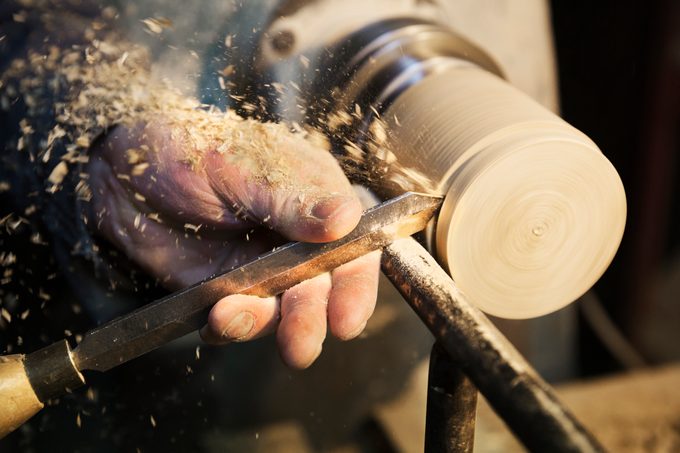
Woodturning is a form of woodworking involving a lathe. With other kinds of woodworking, the wood is stationary and the tool moves to create cuts. In woodturning, the lathe turns the wood on its axis at high revolutions per minute while relatively stationary special cutting tools on a tool rest do the work.

A wood lathe allows woodturners to create all kinds of objects, from bowls to stair railings to chess pieces to musical instruments.

History of Woodturning

The art on monuments in ancient Egypt offers the first recorded instances of spindle turning. These illustrations showed a strap a helper used to rotate the lathe while another worker cut the wood.

The ancient Romans, Chinese, Persians and Arabs had their own variations of the lathe. Early lathe workers would sometimes hold cutting tools with their bare feet while powering the lathe with their hands.

In the 19th and early 20th centuries, woodturners in England employed the master-apprentice system in turning shops, where they crafted cups and bowls as well as detailed tables, chairs and staircases. In Germany and Russia, woodturning was concentrated in villages that specialized in turning toys.

In the U.S., woodturning was part of the industrial arts curriculum in public schools, often a prerequisite for furniture-building classes. In the 1970s, interest in hobby woodturning in the English-speaking world flourished, reviving all things woodturning.

Basic Woodturning Terminology

Man standing at a woodworking machine in a carpentry workshop, turning a piece of wood.

When you read about woodturning or talk with woodturners, these are some terms you’re likely to encounter.

Bevel

The area beneath the cutting edge of a scraper or gouge. The bevel on a gouge is always held in contact with the wood.

Blank

A piece of wood rounded smooth or cut into a section for lathe use.

Burl

An unusual growth on a tree, producing swirls and other interesting grain patterns.

Chuck

A device that holds the workpiece on the lathe.

Headstock

Provides the drive for the workpiece, usually through pulleys connected by a belt to the drive motor of a lathe.

Heartwood

The fully developed wood surrounding the core, usually darker than sapwood (see below) and really dense.

Moisture content

Percentage of water weight to total weight. Moisture content is usually 30 to 40 percent or more when wood is freshly cut (aka “green”). Dry wood typically has moisture content of less than seven to eight percent.

Sapwood

This surrounds heartwood and is usually softer. It transports sap from roots to leaves. It’s a different color than the heartwood.

Spalted wood

Wood in the process of fungal decay that shows as black lines in the grain. Woodturners prize spalted wood because the black lines add an artistic element to the turning.

Tailstock

The movable assembly opposite the headstock that slides along the lathe bed and supports workpieces.

Basic Woodturning Methods

These are the ways woodturners execute their craft.

ABC turning

Anchor/bevel/cut, or ABC turning, is the only safe method to start a cut. Anchor the tool to the tool rest, bring the bevel in contact with the spinning wood, then slightly adjust the angle of the tool until the cutting edge begins to cut.

Spindle turning

Requires mounting wood between the headstock and tailstock, then turning the spindle to create intricate designs.

Segmented turning

Pieces of wood glued together form a blank for turning. The combination of different wood grains and textures creates unique patterns.

Faceplate turning

The woodturner attaches a circular metal plate to the end of the lathe. This stabilizes and holds wood for smoother turning, especially with large blanks of wood.

Bowl turning

A gouge bevel forms a blank into its final shape. This technique uses scraping tools to smooth out the hollow surface and create a seamless bowl.


Article source here: The Basics of Woodturning

Tuesday, November 1, 2022

Why Are Heating Bills Increasing This Winter?

On chilly winter mornings, we reach for the thermostat before getting our first cup of coffee. But like grocery bills, home heating fuel prices are on the rise just as temperatures start to drop.

The U.S. Energy Information Administration (EIA) estimates U.S. consumers will pay an average of 17.5 percent more this winter more for natural gas, electricity, heating oil and propane. Predicted colder than average temperatures combined with higher fuel prices could have a significant impact on your budget.

The EIA’s 2022 Winter Fuels Outlook breaks down what to expect this winter when you review your heating bill. A lot depends on where you live and who provides your fuel. A milder or more severe winter than predicted by the National Oceanic and Atmospheric Administration (NOAA) will also affect the estimates.

What Is Causing Heating Bills To Rise?

Higher prices in the wholesale fuel markets and higher demand by consumers will drive up heating bills this winter, according to the EIA.

Because we can’t easily change how we heat our homes, fuel markets can be more volatile than other commodities. Disruptions like the pandemic and Russia’s invasion of Ukraine impact consumers directly by affecting wholesale fuel prices. Those higher prices are then passed on to consumers, although the speed of rate increases depends on the fuel type.

Weather plays a major role, too. People use more energy in the winter to heat their homes, and that rise in demand can cause supply disruptions. If fuel inventories are low, prices may rise.

Below are some cost factors for specific fuels.

Why Is the Cost of Natural Gas Rising?

Higher consumption and rising retail natural gas prices mean consumers will pay 28 percent higher heating bills this year, or about $931.

Wholesale natural gas prices are based on what’s called the Henry Hub spot price, and that’s expected to be 54 percent higher this winter than last, according to the EIA. (The Henry Hub is a major pipeline distribution hub in Louisiana.)

That increase, which factors in production, inventories and market demand, doesn’t immediately pass through to consumers because of the natural gas market’s regulatory structure. So you’re unlikely to see a 54 percent increase on your heating bill.

The U.S. is projected to end this year’s “injection season” (when producers store natural gas for withdrawal during winter) with the lowest levels of reserve inventories in three years. That’s partially due to exporters shipping liquified natural gas (LNG) to Europe after Russia cut off their supply. High demand in Europe means high prices for exporters and lower reserves in the U.S.

Why Is the Cost of Electricity Rising?

The EIA predicts higher consumption and higher prices will push consumer electricity costs up 10 percent this winter compared to last. That’s about $1,360 per household on average and reflects the total electricity cost of a home, including lights and appliances.

The cost of electricity is depends on the cost of other fuels, namely natural gas. From January to July of this year, U.S. electricity producers paid three times more for natural gas than the same period in 2020, according to the EIA. Other factors include upkeep of plants and transmission lines, weather and regulatory requirements.

Residential customers in deregulated energy markets see a pass-through of higher wholesale prices more quickly than regulated ones. So if you live in the Northeast, you’re expected to pay eight percent more this winter. In the more regulated market in the West, it’ll be closer to four percent.

Why Is the Cost of Propane Rising?

Household propane costs will be up about five percent this winter, due to higher consumption. That’s about $80 more than last year, or $1,680. This estimate does not include homes on the West Coast because the EIA doesn’t collect propane data there.

Similar to natural gas, propane has a spot price, measured at a hub near Houston. That price at the end of September 2022 was down 40 percent from last year. Last winter the propane markets were more volatile due to lower inventories and higher prices, but have since leveled off.

Propane prices are highly regional. While consumption is expected to go up in all measured sectors, prices will be up four percent in the Northeast, down three percent in the South and stay the same in the Midwest.

Why Is the Cost of Heating Oil Rising?

Low inventories, limited refining capacity and low imports in the U.S. distillate market will push retail heating oil prices up this winter, according to the EIA. Couple that with higher consumption due to the forecasted cold winter, and consumers will be paying $2,350 to heat their homes this winter, up 27 percent.

Heating oil prices depend on the costs of three things: crude oil, refining that crude into heating oil and delivering it to homes. As a result, heating oil prices tend to track with crude oil prices. When the price of crude is steady, prices tend to go up in the winter when demand is highest. Regional competition also plays a role.


Article source here: Why Are Heating Bills Increasing This Winter?

What To Know To Start a Community Garden

During World War II, people maintained food security by planting Victory Gardens at homes and public parks. It worked so well that at one point small plots provided close to 40 percent of America’s fresh vegetables.

The idea re-blossoms in times of uncertainty and scarcity, like oil crises and stock market crashes. In the last few years, the popularity of community gardens began to skyrocket again.

“More than ever, community gardens are supporting city residents not only in their everyday meals, but also socially and mentally,” says Carrie Spoonemore, co-creator of From Seed to Spoon, a website devoted to growing food. “In times of crises, the spaces sustainably supply fresh produce to local food pantries and home kitchens.”

What Is a Community Garden?

A community garden is a joint effort to grow food and flowers in a green space. Like a co-op, everyone involved shares the upkeep and rewards. Different groups may come together to form the garden with a unifying purpose — to grow things and beautify their surroundings.

Some benefits include affordable access to healthy food, exercise and community building. It also gets people more involved in nutrition, agriculture and ecology.

“In short, starting a garden can help make real and lasting change in communities,” says Spoonemore.

Steps for Starting a Community Garden

People planting tree seedling together

While each locale has rules and guidelines for community gardens, here are some universal steps for starting one.

Organize interested people

Ask your friends and community about creating a community garden and what should be in it, like vegetables or flower.

“Invite neighbors, tenants, community organizations, gardening and horticultural societies and building superintendents,” says Spoonemore. “Once you determine interest, form a planning committee of five to 10 people who are committed to the creation of the garden.”

Make a plan and an end goal

Decide how your community garden will be used. Will the food be donated to the community? Or will interested people be allowed to grow their own specific crops? Other possibilities are a pound allocation per volunteer, or sales of produce at markets.

“An efficient plan is needed to get the most out of your garden and to know what the best uses of your crop will be,” says Spoonemore.

Identify resources

Contact municipal planners about possible sites. Find knowledgeable partners, like horticultural societies and experienced landscapers and gardeners. Think about all the resources in your community you could tap to create the garden.

Find a sponsor

While some gardens self-support through membership dues, sponsors are essential for donating tools, seeds and money for other supplies. Popular supporters include churches, schools, private businesses and parks and recreation departments.

Choose a site

Think about growing factors like sun, access to water sources and the quality of the soil. Also consider administrative issues, like whether you can get a lease, or if you need liability insurance.

Write up the rules

Rules help gardeners know what’s expected. Will there be dues, and if so, how will the money be used? Can tools be shared? Who handles basic maintenance? How many plots are available and how will they be assigned?

Prep and develop the site

In most cases, the land will need to be prepared. Volunteer crews can clean, gather materials and design the plot arrangement. Include space for storing tools and making compost, and consider creating a special garden just for kids.

“Including them is essential,” says Spoonemore. “Children are not as interested in the size of the harvest, but rather in the process of gardening. A separate area set aside for them allows them to explore the garden at their own speed.”

Also, planting flowers or shrubs around the garden’s edges promote goodwill with non-gardening neighbors.

Communicate

Easy communication among members helps ensure active participation and a strong community garden. Create a telephone tree or email list, plus a rainproof bulletin board in the garden. Regular celebrations also help keep people engaged.

What Is the Cost of Starting and Maintaining a Community Garden?

Startup costs are typically between $3,750 to $7,500, although large community gardens can run as much as $30,000. When budgeting, keep water sources, city fees and contractor wages in mind.

Community gardens also require liability insurance, which can cost between $750 and $2,000 per year. Then plan for between $50 and $100 per month for plots not maintained by members, plus lot rent, which is often several thousand dollars a month depending on size and location.

Community gardeners can be charged between $25 and $50 a year, says Spoonemore. If a community garden is smart about maintaining memberships and selling produce, it can make as much as $50,000 per year. However, Spoonemore says, “Having a sustainable food operation depends on the local economy, as does a lot’s ability to market and retain members.”

More Resources for Starting a Community Garden

  • Start with the American Community Gardening Association (ACGA). They have an annual conference, resources and a community.
  • Visit existing gardens.
  • Consult your local university cooperative extension office.
  • Try these resources from the U.S. Department of Agriculture.
  • Get a planting app, like Park Seed’s From Seed to Spoon. It helps you plan when to plant, choose good companion plants, and estimate important dates like sprouting, harvest and frost.


Article source here: What To Know To Start a Community Garden

What Is Noise-Canceling Wallpaper and Does It Work?

Sick of listening to your neighbors talking or fighting? Worried they might be judging you for binge-watching Love It or List It all day? Maybe it’s time to soundproof your walls.

Typical acoustical sound absorption means hanging thick fabrics or installing ugly foam panels reminiscent of a college radio station. But what if sound reduction wall coverings could be attractive and thin? What if it’s as simple as putting up wallpaper?

What Is Noise-Canceling Wallpaper?

Noise-canceling wallpaper is a misnomer. Noise-canceling implies a near-complete neutralization, as in noise-canceling headphones. Noise-canceling technology requires a power source because it sends out signals to counterbalance the noise from an external source. Wall coverings offer sound absorption instead.

Sound absorption in our living and working spaces doesn’t keep out sound or counteract external noise; it keeps sound in. As sound waves move around your space, they’re absorbed by soft materials like couches and curtains and bounce off hard ones like drywall and wood tables.

Wallpaper can’t keep out external noises like street traffic. To do that, seal up cracks with caulk, tighten doors so they close all the way and add an extra layer of drywall. If you really want to block external sounds, sandwich a layer of mass-loaded vinyl between the drywall layers.

What To Consider When Buying Noise-Canceling Wallpaper

Many wall-covering products purport to be “sound reducing” or “noise-canceling,” but read the fine print. Here’s what to look for:

  • Noise reduction coefficient (NRC): The NRC rating describes a material’s ability to absorb sound. NRCs range from 0.0 to 1.0, with 1.0 the highest.
  • Thickness of material: Absorbed sound waves must be converted to another form of energy, namely heat. Thicker materials generally absorb more heat.
  • Attractiveness: Wallpaper and panels have gotten better looking over the years, so pick the one you like.

Does Noise-Canceling Wallpaper Work?

It depends. Like anything, quality can vary. Some products advertised as “noise-canceling” or “soundproof” wallpapers don’t actually provide pertinent details, like what frequencies they absorb or the NRC rating.

Read Q&As and verified reviews at Amazon before buying. Or stick to high-end wallpaper brands like BuzziSkin and Easewall, which publish specific sound absorption coefficients of their wallpapers.

Three Top Noise-Canceling Wallpaper Options

Acoustical panels provide better sound absorption than wallpaper, but technological advancements continue. Scientists in England recently figured out the absorptive qualities of moth wings could be key to improving the thinness of sound-absorbing wall coverings.

“New research has shown that one day it will be possible to adorn the walls of your house with ultrathin sound absorbing wallpaper,” said the study author in a press release.

Until that day, here are the best wallcovering options to lower the sound levels in your home.

Acoustical wallpaper

Sound-dampening wallpaper options can be difficult to find, but some companies offer attractive varieties with sound reducing qualities. As technology advances, expect to see more of these products on the market.

Acoustical wall covering

Noise-reducing wall coverings, often made of felt or other natural products, provide sound-dampening qualities. Some are made from recycled materials, and they’re good-looking. Bonus: An experienced DIYer should be able to install these coverings.

Acoustical panels

Acoustical panels absorb noise and echoes while creating a warm vibe, but they can be utilitarian. If you want to blast your tunes without looking at black foam, art-inspired acoustic panels add interest to your space and absorb the sound.


Article source here: What Is Noise-Canceling Wallpaper and Does It Work?

The Basics of Wood Carving: What You Need To Know

I first became fascinated with wood carving at age seven when my mother told me the story of how my father proposed.

They were driving along a quiet country road in my dad’s 1968 Ford Mercury in the mid 1980s. During a natural break in the conversation, my dad reached under the seat and produced a lemon-sized object wrapped in cloth. Handing it to my mother, he asked her to unwrap it as he drove.

Inside was a smooth, beautifully hand-carved basswood egg. Dad then asked Mom to check the glove box, where she found a sharp whittling knife. “Carve into the egg,” Dad said.

About 10 minutes later, with shavings covering the truck’s floor and seat, Mom discovered the egg was hollow. Inside was a gold engagement ring. Needless to say, she said yes. Wood carving was instrumental in my parents’ relationship, and perhaps that’s one reason I’ve enjoyed it since I was old enough to handle a whittling knife safely.

If you’re interested in giving wood carving a try, it pays to learn the basics. Keep reading for everything you need to know to begin your wood carving journey.

What Is Wood Carving?

Wood carving involves creating a desired object, shape or design with sharp-edged cutting tools. Although there are many forms, all fit this basic definition. Wood carving tools include knives, chisels, gouges and in some cases even chainsaws!

Some people confuse wood carving with woodturning. Although both remove wood with sharp-edged tools, they’re not the same. Woodturning pieces are created with a motorized device called a lathe. If a lathe is involved, it’s woodturning. If not, it’s wood carving.

Whittling is also sometimes mistaken as a separate form of woodworking. It’s just a simple type of wood carving.

Types of Wood Carving

Carving methods vary greatly. The type of carving you pursue and the tools you use will depend on what sort of finished result you’re after. Here are the different types of wood carving:

Whittling

The simplest form of wood carving, whittling involves shaving off slices of wood with a straight-blade knife. It’s easy to learn and can be done with just about any sharp knife, including a regular pocket knife.

Although you can certainly whittle wood into desired shapes, some people whittle simply as a pastime. Whittling knives made especially for carving give more comfort and control; they’re the best option if you want to whittle something pretty. One benefit of whittling: It can be done with nearly any species of wood.

Chip carving

This involves removing small pieces from a flat wood surface with a chip carving knife or chisel, via downward pressure. It’s good for inscribing intricate lines or details into a workpiece.

Carving letters and numbers into wood is one of my favorite projects. Although many wood species can be chip carved, beginners will have the best luck with basswood, knot-free pine or poplar.

Relief carving

This means carving a picture into a flat piece of wood. Traditionally, carved wooden reliefs are subtly three-dimensional, so the image appears to project out of the wood’s surface.

Gouges and chisels are the usual tools for relief carving, often accompanied by a mallet to drive the tools into the wood. You’ll also need clamps or a bench-top vise because the flat wooden workpiece needs to be solidly secured.

Flat-plane carving

A specific style of figure and object carving, flat-plane carving involves shaping wood with a series of flat, clean facets, then purposely leaving them visible. No sanding or rounding.

Most often done with a single carving knife, wood art collectors around the world favor flat-plane carving. Like all forms of carving, this is easiest with basswood, which strikes the perfect balance between hard and soft.

Chain saw carving

As the name suggests, this involves creating a desired object or figure from wood with a chain saw. It’s almost always done with a single large upright log, and occasionally one that’s still rooted to the ground.

Although chain saws are coarse, aggressive tools, skilled chain saw carvers around the world created some remarkably intricate works of art. Although it’s tempting, don’t try this style of carving unless you’re already experienced with chain saws. And be sure to wear hearing, face and leg protection at all times.

Wood Carving Terms and Techniques

Here are some terms you’ll likely hear thrown around in the world of wood carving:

  • Carving knife: Different from a whittling knife, these feature large handles and small blades, often with a gentle curve in their edge.
  • Chisel: A straight-blade, beveled-edge wood carving tool.
  • Gouge: A type of carving chisel with a curved-edge blade.
  • Mallet: A cylindrical handled tool, often made of wood or rubber, for driving the butt-end of a chisel or gouge into wood.
  • Roughing: Removal of large amounts of wood early in the process, often with a roughing gouge, to get the workpiece closer to the desired shape.
  • Detail work: Generally refers to the fine, intricate work toward the end of a wood carving project. When carving a wooden duck, inscribing lines to suggest wings and feathers is detail work.

Wood Carving Tips for Beginners

  • Keep your wood carving tools sharp: Dull carving tools don’t work well. Learn to sharpen yours to a razor’s edge. Keep them sharp and your wood carving will be much more enjoyable.
  • Carve away from yourself: It sounds obvious, but many beginners carve towards their hand instead of away from it. Don’t. Carve down and away from your hands and fingers for safety.
  • Wear safety glasses: Though carving doesn’t involve power tools (except chain saw carving), lots of chips still fly. Protecting your eyes with goggles is always smart.
  • Start simple: Don’t try to carve intricate projects at first. Start by whittling a walking stick, then go from there as your skills develop.
  • Use the right wood: Regardless of the style of carving, basswood is a great material for beginner carvers. It’s smooth and fine-grained with an ideal carving density.


Article source here: The Basics of Wood Carving: What You Need To Know

What Is “House Blindness”? I Think I Have It

Hear no mess. See no mess. Speak no mess. If only that actually made the mess go away. Sometimes in the life of a DIYer , you get a little t...