Meal Prep Delivery

Thursday, July 1, 2021

Fourth of July Sales You Don’t Want to Miss

The Fourth of July weekend is all about celebrating America’s independence with family, friends, fireworks and barbecue — but be sure to save some time for shopping! The sales this weekend (some are already going on) are too good to pass up. Retailers are slashing prices on everything: furniture, tools, outdoor essentials, appliances and more.

Some of the best Fourth of July sales events are going on at West Elm, The Home Depot and Lowe’s with major savings to spruce up your home and yard this summer. Whether you’re giving your guest bedroom a makeover or replacing the bathroom vanity, now is the perfect time to get the tools and supplies you need at the fraction of the price. These sales are explosive!

Want even more sales? Check out our weekly Deals We Love column.

Best Fourth of July Deals

Henley Leather Chair at West Elm

Henley Leather Chair

You can get your hands on this gorgeous Henley Leather Chair (in tan) for 55 percent off. The sleek mid-century design makes it the perfect accent chair for your living room, office or bedroom.

But style isn’t everything — solid construction and comfort are just as important in a quality armchair. The Henley is made with top-grain leather and sturdy oak wood legs. While you’re shopping, check out up to 70 percent off lighting, decor, rugs and storage solutions during the West Elm Fourth of July Warehouse sale!

Original Price: $1,999.
Sale Price: $899 (55 percent savings).

Shop Now

Ryobi Cordless Tool Combo Kit

Ryobi Tool Kit

Working on that summer project list? You can check it off a lot faster with this Ryobi cordless tool kit. Thanks to The Home Depot Fourth of July Sale the set is $100 off!

It comes with six tools including a drill, impact driver, circular saw, reciprocating saw, LED work light and a multi-tool. The two lithium-ion batteries and the charger ensure you’ll always have power. And you can keep track of every tool and accessory in the convenient carrying case.

Ryobi is a reliable brand you can trust, but for extra peace of mind this set comes with a three-year warranty.

Original Price: $299.
Sale Price: $199 (33 percent savings).

Shop Now

allen + roth Bathroom Vanity

Allen + Roth Vanity

One room that seems to always need updating is the bathroom. Bathroom renovations are not cheap, which is why we’re so excited about this allen + roth Helena 30-in Single Sink Bathroom Vanity on sale for $250 off!

The elegant design with gold hardware and engineered Calacatta marble top makes this vanity look like a designer piece. You’ll also love the soft close dovetail drawers and the easy-to-clean under mount sink. Not sure you know how to install a vanity? Our experts have step-by-step instructions.

Original Price: $599.
Sale Price: $349 (41 percent savings).

Shop Now

Della Outdoor Dining Table

Della Outdoor Acacia Wood Rectangle Dining Table By Christopher Knight Home 5f4b865f 181c 4a82 84f5 7c3ace9a8981 1000

There’s nothing better than eating outside on balmy summer nights. Create the outdoor dining space of your dreams with this Della Outdoor Dining Table, made with beautiful acacia wood and durable powder-coated iron legs.

The clean-lined design pairs well with any style dining chair, and the weighty profile makes it a great centerpiece for your outdoor space. Get it during the Overstock Fourth of July Sale and you’ll save 26 percent! Plus, free shipping on everything!

Original Price: $303.49.
Sale Price: $223.54 (26 percent savings).

Shop Now

Gas Pressure Washer

Gaspressurewasher

Summer is the perfect time to deep clean those outdoor areas that get neglected the rest of the year. Wash your siding, driveway, deck and outdoor furniture with this Gas Pressure Washer, on sale during the Walmart Fourth of July sale).

The powerful motor generates 4,200 pounds per square inch (PSI) of water pressure so you can blast off dirt and mold with the push of a button. The convenient handle and anti-slip wheels make it easy to roll around as you work. Here’s exactly how to use a pressure washer, explained by our experts.

Original Price: $856.99.
Sale Price: $475.89 (44 percent savings).

Shop Now

Want more deals and product picks sent directly to your inbox? Sign up for the Stuff We Love newsletter!


Article source here: Fourth of July Sales You Don’t Want to Miss

How to Make a Bee Watering Station With a Bowl of Marbles

Close Up Of Honey Bee Drinking Water

“Busy bee” is a term often used to describe friends and relatives who are always doing something. You probably could have guessed the phrase comes from the active lifestyle of the bee, but you may not know that the yellow-and-black pollinators tend to about 2,000 flowers daily. That’s hard work!

Even if your yard lacks a pretty pollinator garden, you can still make it a friendly and accessible pit stop for those industrious bees.

How to Make a Bee Waterer with Marbles

Like humans, bees need water on hot summer days to drink and cool off. Unfortunately, when they stop at birdbaths or forest streams, they risk drowning or encountering larger animals looking for a snack.

There’s a simple, safe solution. Grab a pan or shallow bowl and add a good amount of stones, pebbles or marbles. Then fill it with water. The rocks and knick-knacks will give bees a nice landing spot and help avoid drowning. It’s best to change the water every week or so to make sure other insects don’t lay eggs.

Should I Add Sugar to the Water?

It may sound like a good idea, but don’t add anything to the water, especially sugar and honey. Bees are quick learners. If they stop at the bee watering station in your yard and taste sugar, they might keep returning with their friends to collect the sugar instead of picking it up from flowers.

Honey sounds like the next best option, but unfortunately adding it to your bee waterer has similar consequences. Honey can also contain a fatal bacterium. If a bee brings it back home, it could infect the whole hive. It’s best to stick with clean, fresh water and marbles.


Article source here: How to Make a Bee Watering Station With a Bowl of Marbles

How To Get Dog Poop Out of Carpet, Wood & More

Plenty of households across the country are home to at least one dog. The American Veterinary Medical Association estimates 48.2 million households in the U.S. own one. While dogs bring a lot of joy, they also bring a lot of poop.

Whether you’re a new pet owner or a longtime dog person, it’s smart to know how to address poop messes on different types of surfaces, indoors and out, so you can spring into action when accidents occur.

Keep in mind that dog poop carries some germs. Wear gloves when cleaning and be sure to test any cleaning products in an inconspicuous spot, following the manufacturer’s instructions. As you clean, keep your dog (and children) out of the way. Remember that different cleaners should never be mixed.

You may also wish to follow up by disinfecting the surface. Disinfect the scrubbing brushes or rags you use while cleaning, and wash your hands well after.

How to Get Dog Poop Out of Carpet and Rugs

To clean dog poop from carpet, use an enzymatic cleaner. Dr. Stacy Choczynski Johnson, a veterinarian on staff with Pumpkin, a pet insurance company, says these cleaners remove the animal smells that may encourage a pet to repeatedly urinate or defecate in a specific area of the home. Johnson likes Nature’s Miracle, a pet-friendly enzymatic cleaner that can be used on many surfaces.

To clean poop off carpet and rugs:

  • Scoop away as much of the poop as possible.

  • Apply the cleaner according to the manufacturer’s instructions.

  • Blot the spot with a dry white towel and avoid scrubbing, which will grind the stain into the carpet fibers.

If you don’t have an enzymatic cleaner on hand, reach for some soda water, says Vera Peterson, president of Molly Maid, a Neighborly brand.

  • Put undiluted soda water directly on the stain and blot with a dry white towel.

  • Repeat until the moisture is absorbed.

  • Then place a fresh, dry white towel on the area and place a heavy object on the towel to soak up the remaining moisture.

How to Get Dog Poop Out of Tile and Wood Flooring

Cleaning dog poop off hard surface floors like tile and wood is much easier than carpet. Simply pick up all bits of poop, then use an enzymatic cleaner to scrub the floor. It’s important to do a thorough job so your dog doesn’t keep coming back to the same spot.

How to Get Dog Poop Out of Vinyl Flooring

To clean dog poop from vinyl floors, scoop the poop and then make a DIY cleaner. Natalie Barrett, cleaning professional and quality supervisor at Nifty Cleaning Services, suggests this:

  • Mix one cup vinegar with two tablespoons of dishwashing detergent and one gallon of hot water in a bucket.

  • Dip a brush in the mixture and scrub the stain off the vinyl.

  • Rinse with fresh water.

  • If the stain remains, mix equal parts baking soda and water and apply the paste to the stain.

  • Let it sit for 15 minutes. (Don’t let your pup go sniffing around the mixture.)

  • Clear away the paste, rinse and dry.

How to Get Dog Poop Out of Upholstery

If the poop lands on a pillow cover or slipcover that can be laundered, that’s the best route. To clean poop off items like sofas and chairs, Peterson recommends blotting with soda water to lift stains and odors, or using a pet stain and odor remover product that has been specially formulated for use on upholstery. Always test products in an inconspicuous area.

How to Get Dog Poop Out of Leather

Barrett says to reach for a few common kitchen ingredients to remove dog poop stains from leather:

  • Combine one tablespoon of lemon juice and one tablespoon cream of tartar.

  • Apply the mixture to the stain and let it sit for 15 minutes.

  • Use a damp sponge to wipe away the paste and blot the stain.

  • Rinse the sponge as needed and repeat the process until the paste is cleared and the stain is gone.

How to Get Dog Poop Out of Fabric

For fabric items that can be washed such as a blanket or towel, Jodie Hamilton, a certified cleaning expert with Amazing Services, recommends a simple pre-treatment before laundering:

  • Mix 10 parts water to one part laundry detergent.

  • Apply to the stained area and blot with a brush.

  • Let it sit and then blot with a dry white towel, rinse, launder and dry as directed on the item’s tag.

How to Get Dog Poop Out of Decking

Even though you’ve diligently trained your dog to take care of business in the yard, accidents can happen on other outdoor surfaces like decking. After clearing away the poop, Barrett says to sprinkle the area with baking soda, let it sit for a bit, then sweep it away with a broom.

How to Get Dog Poop Out of Concrete

Concrete is another common outdoor surface and susceptible to the occasional accident. When that happens, Barrett says to soak the affected area with boiling water and then sprinkle the spot with baking soda. Scrub in the baking soda and let it sit overnight. In the morning, pour a cup of hot water over the baking soda and repeat the scrubbing process. Wash with clean hot water.


Article source here: How To Get Dog Poop Out of Carpet, Wood & More

15 Common Backyard Birds You Should Know

People love watching birds, there’s no doubt about it. There are 41 million backyard birders in the United States. If you’re ready to give this hobby a try, a good place to start is learning about the birds you’re most likely to spot in your backyard. We’ve rounded up 15 common birds, along with tips on identifying and attracting them.

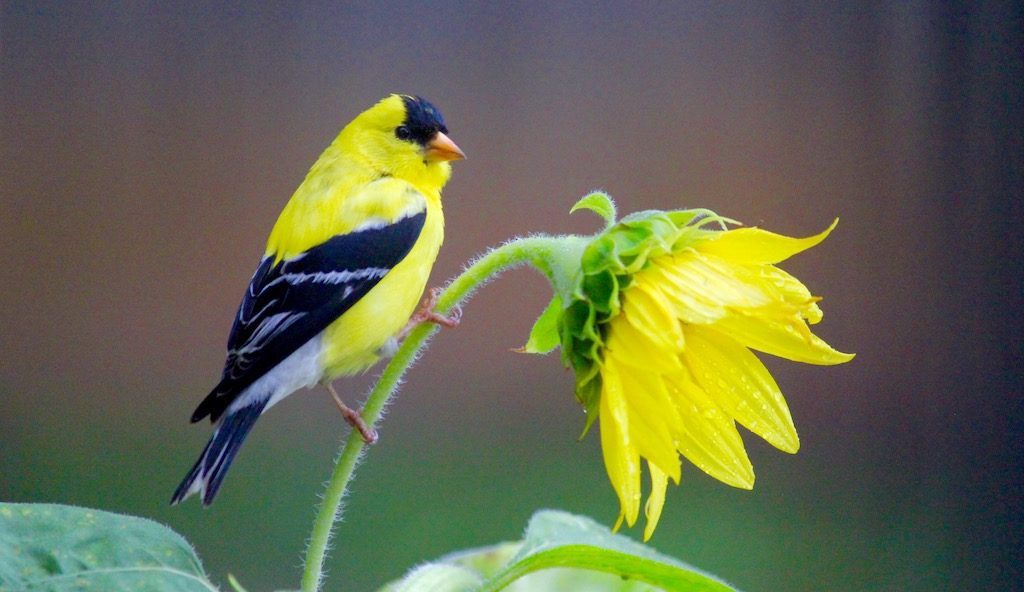
American goldfinch on a sunflower

American Goldfinch

Spinus tristis

In the spring and summer, bright yellow-and-black American goldfinches are impossible to miss. To attract more goldfinches, offer thistle feeders. These small birds also love to dine on seeds from plants in the garden. In the winter, their coloration is more muted, but they’re still around and active.

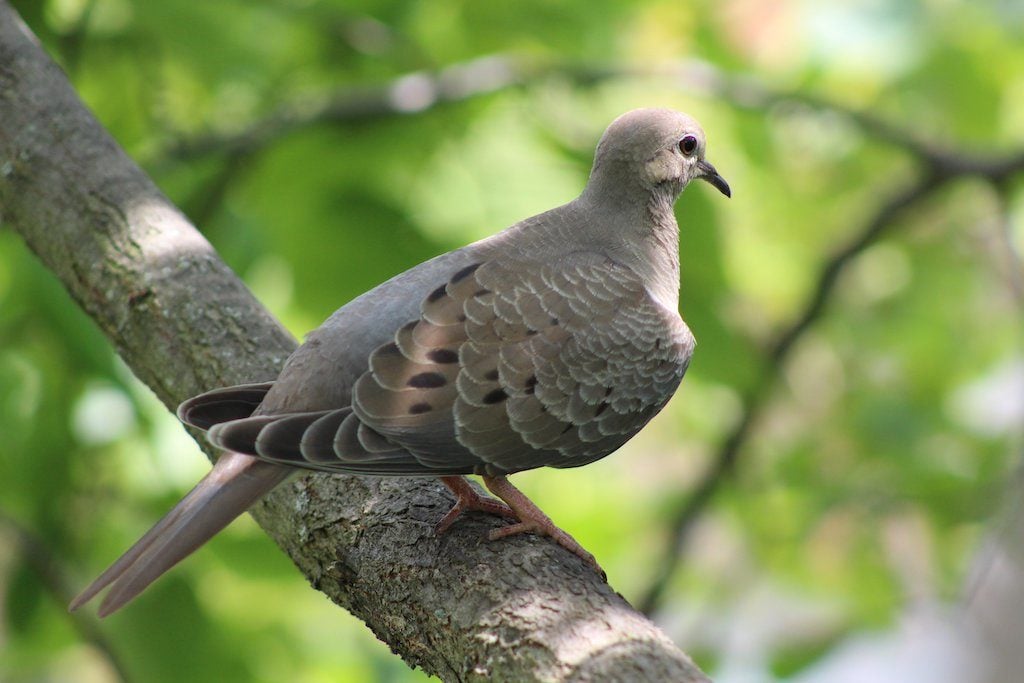
A mourning dove sits in a tree.

Mourning Dove

Zenaida macroura

These plump gray birds are larger than some of the the other songbirds that visit your feeders. Mourning doves often settle in and eat large amounts of seed, but make up for it with their sweet insistent cooing call. When they fly, their wings make a sharp whistling sound, which is especially noticeable on landing and take-off.

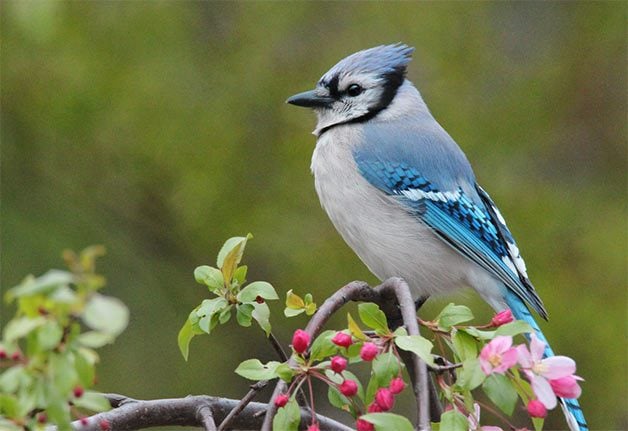
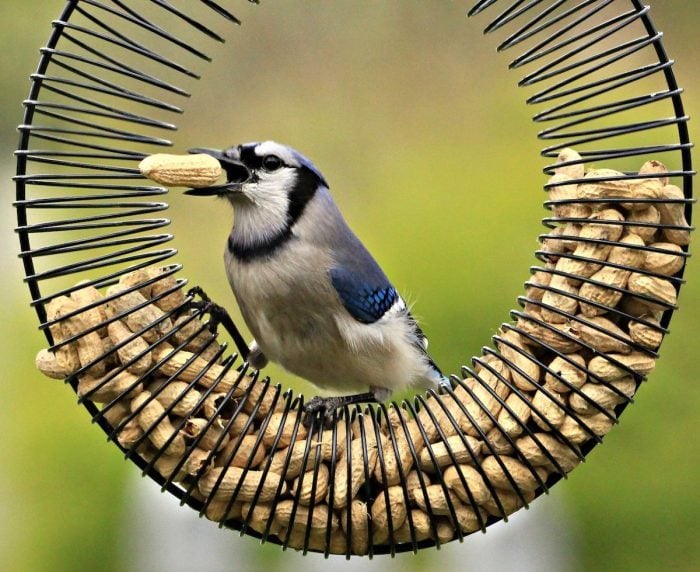
spring blue jay sitting in crabapple tree

Blue Jay

Cyanocitta cristata

Another large bird, blue jays have somewhat of a bad reputation. They’re sometimes called bully birds for their habit of scaring other birds away from feeders. But these handsome jays are very smart and playful, too. Keep your eye on them, and you may see them toting around shiny objects like bottle caps or foil. To attract blue jays, offer peanuts. In the western U.S. and Canada, blue jays are displaced by Steller’s jays and scrub jays.

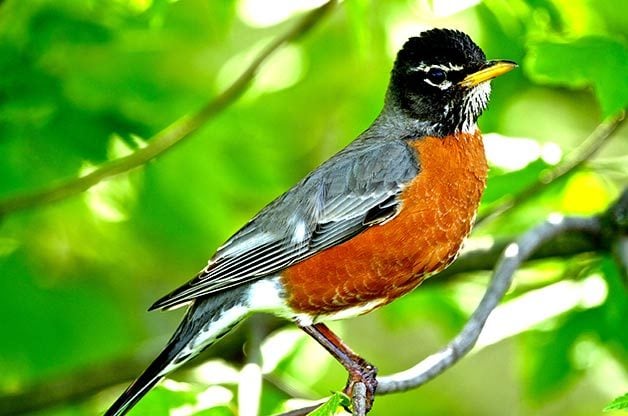
male American robin sitting in tree

American Robin

Turdus migratorius

Often considered a harbinger of spring, American robins are actually year-round residents in most of the U.S. They eat mainly insects, so in the winter, they disappear into forests where they dig under bark for their meals. As soon as the ground thaws in the spring, they reappear in yards everywhere, foraging for worms and bugs.

Ruby-throated hummingbird flies near red flowers

Ruby-Throated Hummingbird

Archilochus colubris

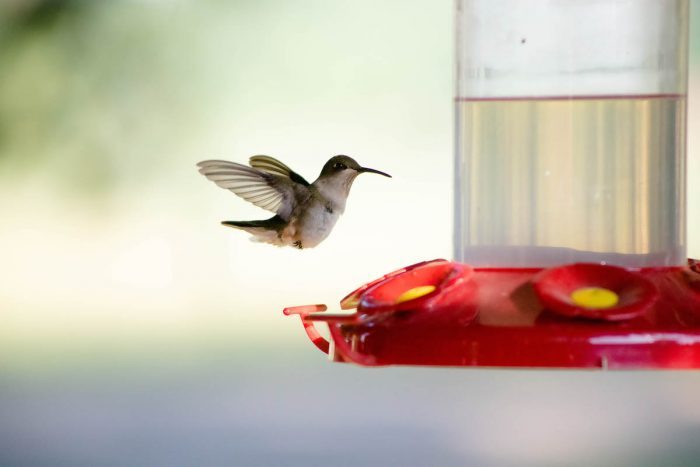
These little sparkling gems are the favorite backyard bird of many, and for good reason. Their ability to hover on wings that move almost too fast to see makes them fascinating to watch. They don’t eat seeds, instead, attract hummingbirds with sugar-water feeders or nectar-producing flowers. In the western U.S., ruby-throated hummingbirds are replaced by Anna’s hummingbirds and rufous hummingbirds.

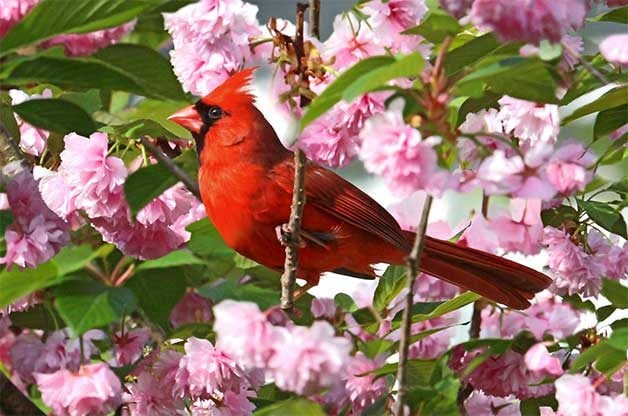
Northern cardinal in spring

Northern Cardinal

Cardinalis cardinalis

Red northern cardinals, with their perky crests and black eye masks, are easy to identify. Females are a drabber brown, but their matching crests and bright orange bills make them special, too. Their high-pitched chip calls and “what-cheer” songs are also distinctive. Attract more cardinals with their favorite black oil sunflower seed.

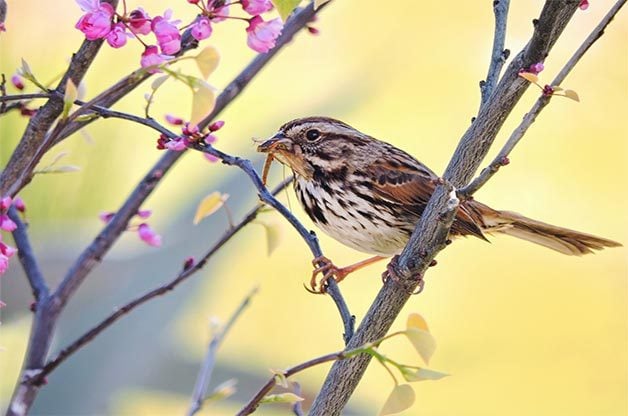
A song sparrow munches on an insect.

Song Sparrow

Melospiza melodia

Admittedly not the most striking bird in appearance on this list, the song sparrow is so incredibly common it’s worth being able to recognize. They can look quite different in parts of their range. Their songs are sweet, but it’s the obvious “chimp” call that makes this bird easy to identify for beginners.

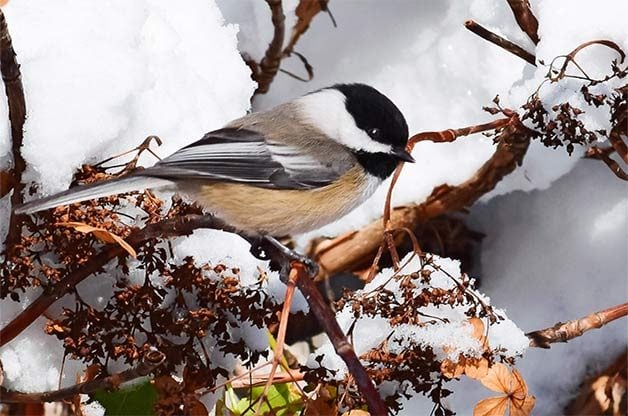
Black-capped chickadee in the snow

Black-Capped Chickadee

Poecile atricapillus

Ever dreamed of a bird landing and eating seed from your hand? Then you’ll want to get to know the black-capped chickadee! This is one of the friendliest birds in America, and adorable to boot. Their “chickadee-dee-dee” call is one of the first many birders learn to recognize. There are six other chickadee species in North America, and all have winning personalities.

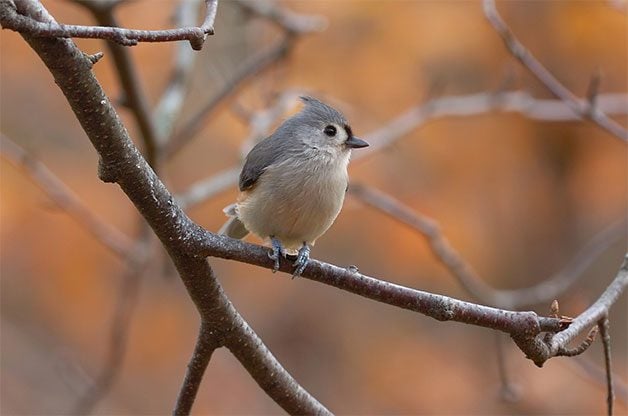
A tufted titmouse sits on a branch in fall.

Tufted Titmouse

Baeolophus bicolor

Speaking of cute, check out the tufted titmouse! Gray-backed with a white belly, this bird also boasts flashes of orange and a jaunty crest. Titmice are fun to observe at feeders, as they hold one seed in their feet and pound it open to get the meat within. In fall, watch their hoarding behavior as they store up food for winter.

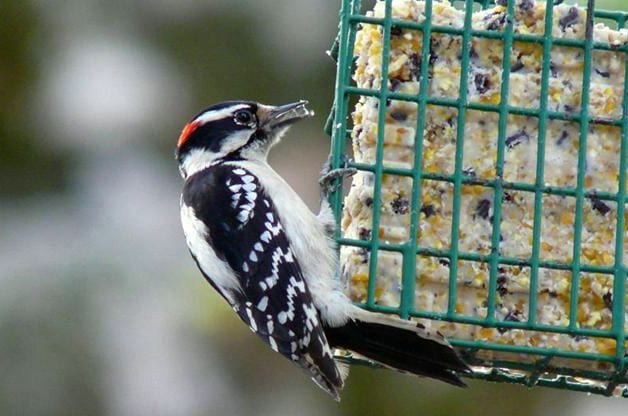
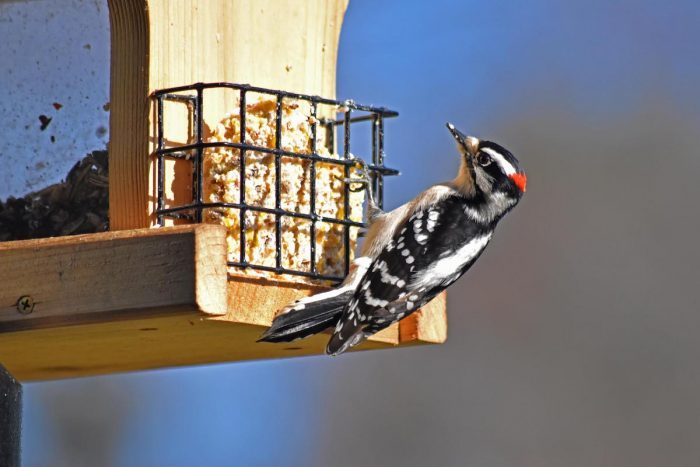
Downy woodpecker at suet feeder

Downy Woodpecker and Hairy Woodpecker

Picoides pubescens / Picoides villosus

One of the first challenges of beginning birders is learning how to tell the difference between the downy woodpecker and hairy woodpecker. Both are small black-and-white birds with red on their heads, and both love to visit suet feeders. Eventually, you’ll learn to look for the shorter beak on downy woodpeckers, but to start, know that the larger birds you see are probably hairy woodpeckers.

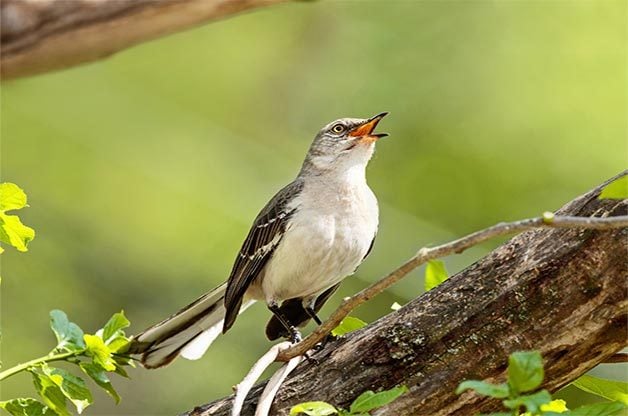
A northern mockingbird sings.

Northern Mockingbird

Mimus polyglottos

The name is no joke — Northern mockingbirds can have a repertoire of more than 100 songs and calls. They mimic other birds, but they also copy car horns and alarms, squeaky doors, and more. They are insect and berry eaters, so you can attract mockingbirds by offering mealworms or planting berry bushes in your yard.

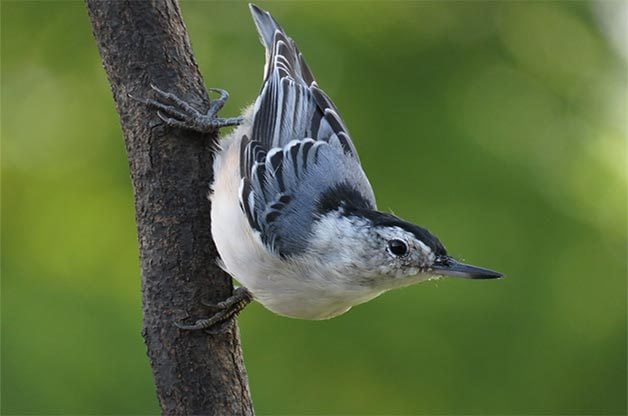
White-breasted nuthatch on branch.

White-Breasted Nuthatch

Sitta carolinensis

White-breasted nuthatches are easy to spot due to their unique habit of hopping around upside-down. They eat just about everything, and have a special love for large seeds like peanuts and acorns. They jam these nuts into tree crevices and whack them to open and pry out the meat. There are three other nuthatch species found in North America, and all of them are amazingly acrobatic.

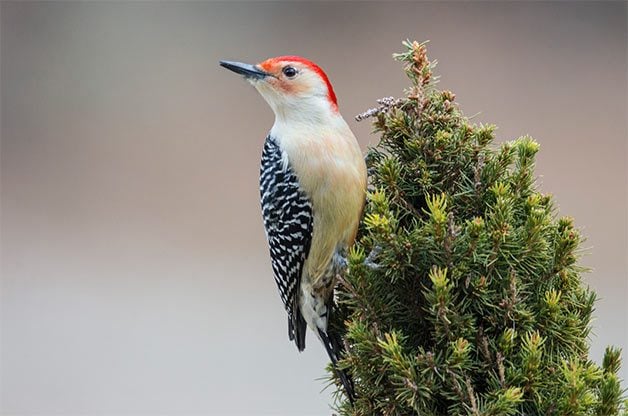
Red-bellied woodpecker perches on a branch

Red-Bellied Woodpecker

Melanerpes carolinus

This is a confusingly-named bird, no doubt about it. The red head markings are much more obvious, but there’s already another bird named the red-headed woodpecker. Instead, this woodpecker takes its name from the faint red markings on its belly. Red-bellied woodpeckers are common in the eastern half of the country. To attract red-bellieds, offer both suet and seed feeders.

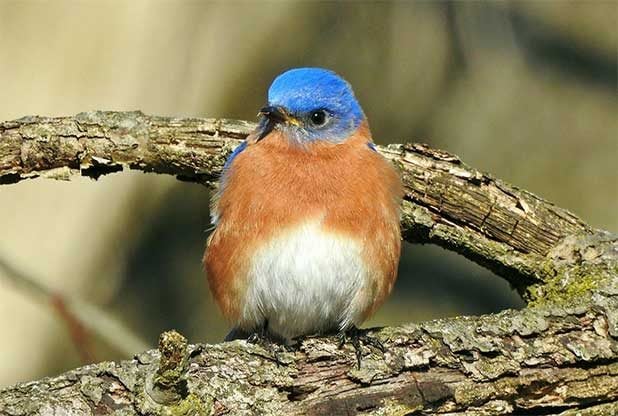
Eastern bluebird sits on a branch

Eastern Bluebird

Sialia sialis

Bluebirds are beloved wherever they’re found. You won’t attract bluebirds with seed feeders; they love insects. You can offer live or dried mealworms to draw them to your yard. They may also choose to nest in your area if you provide the right conditions. Eastern bluebirds are found in the eastern half of the country, as their name suggests. Mountain bluebirds inhabit the Rockies, and western bluebirds fill in the rest of the country.

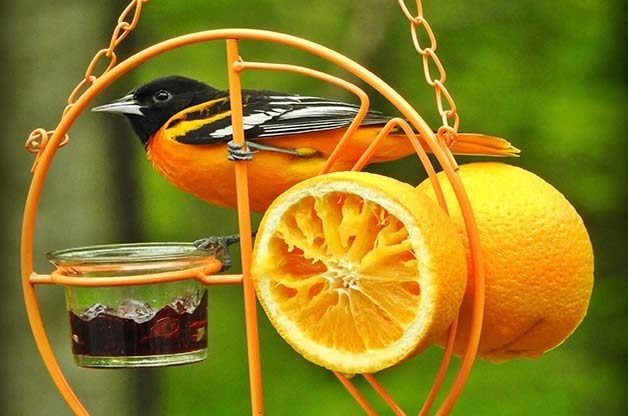
Baltimore Oriole

Icterus galbula

It may take a little extra effort to attract orioles to your yard, but most birders definitely think it’s worth it. These bright orange beauties spend their winters in Central America, so lure them in when they return in spring with their favorite refreshments — oranges and grape jelly. In the western half of the country, Bullock’s orioles replace Baltimore orioles. They also love sweet treats.


Article source here: 15 Common Backyard Birds You Should Know

9 Foods You Should Never Feed to Birds

suet feeder downy woodpecker

When you see small, sweet creatures hopping along, it seems so harmless to draw them in with whatever snacks you have available.  Though the urge is fierce to feed birds bread and other convenience foods, try to resist. Dishes people consume are generally bad for birds in the same way that junk food is bad for our systems.

“Malnutrition is certainly a risk if birds aren’t getting the food that they need,” says John Rowden, senior director for bird-friendly communities at Audubon. “They can be undernourished, which makes them more susceptible to disease, so it could cause health or lethal consequences.”

With that knowledge, here’s a list of nine nibbles to avoid feeding your feathered friends.

Bread

People often ask if birds can eat bread and if bread is bad for birds. Because bread causes birds to become full quickly, fliers may skip foods with actual nutritional value.

Raw Meat

It might seem like a good idea to set out raw meat as a winter treat, but it can go rancid and spoil—and attract unwanted guests. “As soon as you put raw meat out it starts to transform because it’s outside of a refrigerated environment,” John says.

blue jay eating peanuts

Seeds and Nuts Sold for People

Sunflower seeds and legumes made for humans often have large amounts of salt. Birdseed is produced specifically for birds, leaving out the extra sodium. Or instead of shopping for birdseed, save time and money by growing native plants that produce fruit, seeds and nectar. Favorites include crabapple trees, sunflowers and salvia.

Bacon Fat

Bacon fat is very salty, has additives and spoils easily. To make suet, get high-quality fat straight from the butcher, before it gets processed.

Potato Chips

While this popular snack is often a staple at outdoor gatherings, just like when birds eat bread, it doesn’t provide proper nutrition. Keep these salty snacks for the people at your next picnic.

hummingbird feeder

Honey

You’d think birds could use the calories and sugar, but honey can grow mold in addition to becoming troublesome and sticky.

Red Food Coloring

There’s no need to add any food coloring to your hummingbird sugar water. The dye is harmful and won’t attract more birds.

Old Birdseed

Serve fresh seed to ensure your backyard friends aren’t exposed to moldy or rancid food. Learn how to clean your bird feeders.

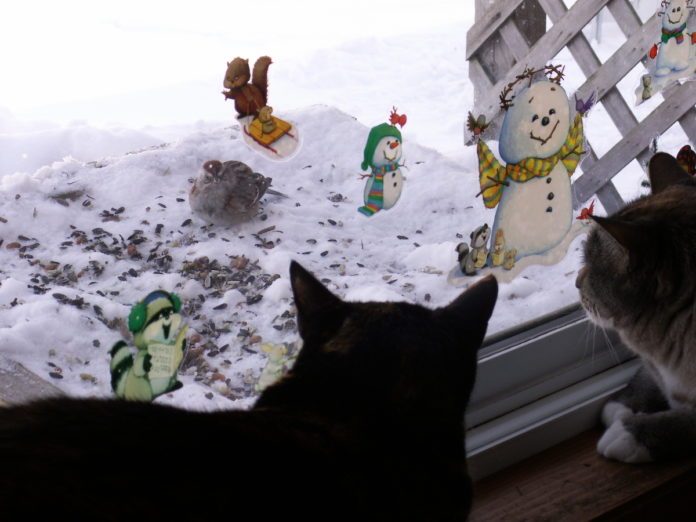
how to keep cats from killing birds, indoor cats watching birds

Pet Food

Dog and cat food lacks nutrition for birds and may attract mice, rats or other backyard pests. In the end, it all comes down to mindset. “In their heart of hearts, people are trying to do the right thing, and what they want to do is help birds,” John says. “Great; we want to encourage that, it’s just finding the right foods.”


Article source here: 9 Foods You Should Never Feed to Birds

Wednesday, June 30, 2021

7 Red Flags Someone Is Stealing Your WiFi

stolen wifi

Beware the WiFi Sneak

WiFi is a hot commodity. Especially now, when remote work and school are critical to everyday life and people are spending hours online when many outside attractions are closed.

If you’re lucky enough to enjoy good, working Internet during this time, that’s great. But could someone else be taking advantage of your connection? Here’s how to know if someone is stealing your WiFi, and what to do about it. Plus, check out these WiFi extenders and boosters that will quicken your connection.


Article source here: 7 Red Flags Someone Is Stealing Your WiFi

How to Unlock a Car Door Without Your Keys

Unlock a Car Door Without Keys

Realizing you’ve locked keys in your car is never fun, especially when you’re running late. Luckily, newer cars make it much more difficult for you to do this. But if you find yourself standing outside your locked car with your keys sitting in the cupholder, these tricks will come in handy.

Before you send out the “locked keys in car” SOS text, learn how to unlock a car door without your keys with these three methods. Plus, check out some simple methods so that you never lose your keys (or anything else) again.

Use String

Here’s a tip for the next time you have to send the dreaded “locked keys in car” text: Keep a roll of string around, and you’ll never have to cash out for a locksmith again. The video below shows you how to unlock a car door without your keys.

Just tie a slip knot in the string per the video’s instructions, creating a loop the size of your index finger at the end. Then, wiggle the string with the loop into the upper right corner of the driver’s window. Now, holding the string with both hands, move it gently in a back-and-forth motion (like you’re flossing a giant tooth). Doing so will shift the string further down the window and toward the inside lock.

This is where things can get tricky. Carefully maneuver the loop over the lock, pulling the ends of the string to tighten the loop at the same time. When you think you have a solid grip around the lock, gently pull up on it to unlock the car door. Voilà! You’re back in action — and back on the road. Before shifting into gear, be sure to never do these crazy things when you drive.

Try a Coat Hanger

The coat hanger trick is a classic; you’ve probably seen it in a few movies. All you need is a coat hanger and pliers.

“Use the pliers to unravel the coat hanger so you have one side hooked and one that’s straight,” says Laura Gonzales, marketing manager at Audi Bellevue in Washington state. “You’re going to slide the coat hanger between the window and the weather stripping. Once the hook is below the window, you can start fishing around for the control arm. Once you find it, pull onto it and your door will open.”

Plus, these car hacks will instantly improve your driving experience.

Use a Wedge

This method can be a little tricky, warns Bill Evans, manager of J&E Auto Body in Clark, N.J. Find a thin but strong tool you can use as a wedge. Pull the top of the door frame out with a pry tool and push the wedge in to hold the door frame out. Then, using a long, skinny rod (it could even be a coat hanger), push the unlock button.

“Triple A drivers and tow truck drivers usually do it this way, and that is how we do it also,” says Evans. “However, even the experienced people will scratch the paint or tear the weather stripping during this process, and you may need to see a body shop to realign the top of the door frame since sometimes they remain bent out away from the body after the wedge is used.”

So make sure the repair costs are really worth it before using a wedge to get yourself out of your “locked keys in car” debacle. If you’re nervous about damaging your car, you can always leave it to the professionals and call someone to help.

Up next, learn the secret powers of your key fob you need to know.


Article source here: How to Unlock a Car Door Without Your Keys

When Are You Too Old To Move Furniture? Experts Weigh In

While it’s nice to be able to tackle projects around the house yourself, it’s also important to know your limits, especially as you get olde...